
In the past year, a handful of American comedies have drawn their laughs from the trials and tribulations of having a baby. Baby Mama is a little different to the likes of Knocked Up, Juno and Waitress though; while those films dealt with the fallout from unplanned pregnancies, this amiable effort is more concerned with the desperate need to have a child. The directorial debut from Saturday Night Live writer Michael McCullers stars Tina Fey as upwardly mobile businesswoman Kate Holbrook. She's a top executive for the Round Earth organic food corporation, but her personal life is predictably less successful. She's 37, single, and pining for a baby, a desire she spells out in all-too-honest way early in the film, leaving the poor man she's on a date with running for the exit. IVF treatment doesn't work for Kate ("I just don't like your uterus" a doctor repeatedly tells her), and her adoption enquires get lost in a mountain of red tape, so she decides to give surrogacy a try, eventually striking a deal with bubbly, naïve blonde named Angie (Amy Poehler).
Angie and Kate couldn't be more different, and that's the basic concept for Baby Mama in a nutshell; it's The Odd Couple with a highflying yuppie and white trash bimbo replacing Oscar and Felix. Angie moves into Kate's apartment when she splits up with her cheating boyfriend (Dax Shepherd), and standard culture-clash hi-jinks ensue, with Angie not taking kindly to Kate's healthy, sterile lifestyle, and Kate being appalled by the behaviour of her messy, lazy houseguest. McCullers doesn't bring any imagination to bear on this already stale scenario, and while his script does take the opportunity to satirically snip at various aspects of 21st century parenting, these sideswipes are pretty weak. A sharper, more experienced filmmaker may have squeezed more juice out of Baby Mama's screenplay, but McCullers' direction barely rises above sitcom level, with basic staging and an over-reliance on Jeff Richmond's syrupy score to highlight the film's emotional beats. The central narrative follows an obvious arc, with Kate and Angie growing together – one learning to loosen up, the other to mature – and although McCullers does have one plot twist up his sleeve, it doesn't do much to derail the film's disappointingly sappy ending.
In spite of all this, I laughed a lot at Baby Mama. It's not a great film by any means, but it's a damn funny one in places, and most of the time its flaws are gracefully covered by the superb central partnership of Fey and Poehler. The pair's contrasting characters meld brilliantly, and they successfully suggest a semblance of genuine feeling in both their friendship and their confrontations. Poehler has previously been seen hanging around the edges of films like Blades of Glory, and she makes the most of her step up to a more substantial role with a fantastic comic turn. She plays Angie in broad strokes but she always ensures the character retains a sweetness and likability that pulls her away from caricature. Many of the film's most notable moments, such as Angie struggling to cope with Kate's childproof toilet or trying to disguise her identity when Kate's boyfriend turns up at the apartment, are scenes which are elevated a couple of notches through Poehler's efforts alone. Alongside her, Fey is essentially playing the straight foil in this comic partnership, and it's a role she's more than capable of fulfilling. Baby Mama offers Fey the opportunity to play it safe while making her transition to the big screen, with the character of Kate Holbrook being almost indistinguishable from 30 Rock's Liz Lemon, and while it might have been nice to see Fey stretch her wings a little more, she's undeniably great at what she does.
In fact, Baby Mama could have surely benefitted from getting more out of Fey on the writing side of the project. She has already dealt with the theme of baby obsession in a 30 Rock episode – which was much funnier and more pointed than this – and it would have been interesting to see where she might have taken the scenario Baby Mama offers, with the hope that she'd avoid driving the film into the lame, sentimental cul-de-sac it eventually settles in. There was the potential for a far more interesting film in here somewhere, and Baby Mama does feel rather insipid after more daring pictures like Knocked Up, but it's a hard film to dislike, and it has at least one attribute that both surprised and delighted me. While there are fine comic performances all over the picture – from Fey, Poehler, Romany Malco and Sigourney Weaver – the biggest joy of Baby Mama was seeing a once-great talent finding some semblance of his old magic. Yes, that's an uncredited, ponytail-wearing Steve Martin as Kate's dippy, new age boss, and this scene-stealing cameo allows him to be hilarious for the first time in many, many years. A look at Martin's last decade in film is a profoundly depressing experience, but this is the sort of part he needs to get his career back on track: small, cleverly constructed character roles in films that make good use of his particular presence and delivery. Alas, The Pink Panther 2 is already in development, but at least Baby Mama suggests that Martin is still interested in giving us more.

A dark cloud looms over The Dark Knight. Even if Heath Ledger hadn't died earlier this year, Christopher Nolan's superhero sequel would have been notable for its ultra-serious exploration of morality, and for the often startling levels of violence (physical, emotional and psychological) that it displays throughout, but the young actor's passing seems to have added an extra layer of tragedy to a film already mired knee-deep in death and fatalism. This film steps outside the comfortable surroundings in which we expect to find summer blockbusters, delivering a complicated and fascinating cinematic experience that takes the central character to some dark places, forces him to break his own rules, and then watches as he tries to cope with the consequences of his actions. For Bruce Wayne (Christian Bale) and his crime fighting alter-ego, this is a step into the unknown, and that void of uncertainty is personified by The Joker (Ledger), a harbinger of chaos who arrives in Gotham with no past, no motive, and only a keen desire to spread terror and destruction in his wake. As Bruce's butler Alfred (Michael Caine) astutely observes "some men just want to watch the world burn".
The biggest advantage for Nolan in returning to this story is the absence of necessary exposition. Batman Begins suffered from a clunky opening hour that showed us how Bruce learned his craft under the tutelage of Liam Neeson ("to conquer fear, you must become fear!") and the film only started to lift off when he began using those skills against Gotham's criminal underworld. The Dark Knight has no such obligation to set the scene, and Nolan, who wrote the screenplay with his brother Jonathan, pitches us straight into a city that has changed in unexpected ways since Batman began taking law enforcement into his own hands. He has inspired a number of copycat vigilantes, and the mob (led by Eric Roberts) has reluctantly joined forces with the unpredictable Joker to finally kill the caped crusader. Batman still has honest Lieutenant Gordon (Gary Oldman) on his side, and the idealistic new District Attorney Harvey Dent (Aaron Ekhart) offers a second ray of light in this murky place, but the burden of responsibility, and the increasingly hostile reaction of the public, has left Bruce Wayne wondering how much longer he can continue to live a double life.
Early in The Dark Knight, Harvey Dent remarks "You either die a hero, or you live long enough to see yourself become the villain", and this line becomes something of a self-fulfilling prophecy both for him and Batman. Nolan's chief interest in this film is to explore the self-imposed boundaries of those who wish to do good. Dent and Wayne are after the same thing, coming at it from different directions, but they both find their values being corrupted during the course of their battles with The Joker, and film grows darker and more introspective as it charts their fall from grace, to the point where I found it almost suffocating. The Dark Knight is a curious breed; it's surely the most subversively weird and thematically ambitious mainstream movie for many a long year, but I can't quite take it to my heart. While I have nothing but respect for Nolan's attempt to raise the bar for superhero movies, to practically redefine the genre, I think he falls somewhat short of those bold ambitions, and The Dark Knight is ultimately a much easier film to admire than to love.
It just feels so cluttered, so hectic and full of incident that Nolan can't find a smooth way to move between his plot points. His transitions are frequently abrupt and rarely graceful, he often cuts away at a point that leaves us with a nagging gap in the narrative, asking "how did that guy get out of there?" or "where are we now, exactly?", and he employs at least one outrageous cheat to overcome a particularly sticky story point. There's a lot going on in this film, and while Nolan does find time to alight on some striking, lyrical imagery – like The Joker gleefully leaning out of a police car, the despairing sight of Dent lying face down in gasoline, or the frequently breathtaking IMAX-filmed cityscapes – the film is more often in a desperate hurry, leaving the audience to play catch-up. The other big, big problem that arises from his direction is his handling of the film's action sequences, a major weakness in Batman Begins that is only partially remedied here. Nolan has no idea how to shoot these aspects of his picture in a coherent manner, and most of the combat scenes consist of a flurry of limbs, edited into oblivion, before somebody winds up on the floor. The opening bank heist, to be fair, is skilfully staged, but Nolan appears to be less sure of himself with each subsequent set-piece, as his inability to establish spatial awareness and to maintain it via the editing again comes to the fore. A useful comparison would be Paul Greengrass, whose work on the Bourne films has seen him utilise rapid editing techniques while never losing sight of where his characters are in relation to each other. In contrast, two of The Dark Knight's biggest action scenes – a car chase and a climactic skyscraper battle – are crippled by confusion, with the latter sequence being a flat-out disaster, additionally hampered by the use of a dreadful Bat-vision gimmick. These sequences should be the film's highlights, but Nolan doesn't come close to making them work.
Instead, The Dark Knight's highlights are to be found in other areas, parts of the film that make better use of Nolan's directorial skills. As a filmmaker, one gets the sense that the explosive demands of blockbuster cinema are the parts of the process that interest him least, and he's a far more potent director when he's simply exploring the dynamic between two people, with this being particularly true when one of those two people is The Joker. Heath Ledger's performance dominates The Dark Knight. He is both funny and disturbing, bringing jolt of electricity to the picture every time he appears; his smeared makeup and lank, greasy hair presenting a very different Joker to any previous screen incarnation of the character. Ledger employs a lizard-like flick of the tongue and a stiff, shambling gait in his walk, delivering the kind of instantly memorable performance that transcends genre, in much the same way that Michelle Pfeiffer's Catwoman did over 15 years ago.
The Dark Knight's finest moments occur when Ledger is allowed to go face-to-face with the other characters, pushing their buttons, getting under their skin, and espousing his own twisted philosophy. In these scenes Ledger is vivid and eerily charismatic, and he brings the best out of his co-stars, firing up Bale's Batman in their interrogation room scene, exuding genuine menace as he holds a knife to the mouth of Rachel Dawes (Maggie Gyllenhaal, not at her best but a step-up from the useless Katie Holmes), and partaking in perhaps the film's best encounter, next to the freshly-scarred Harvey Dent's hospital bed. As Dent, Ekhart gives the most surprising performance in the film, displaying a presence and sensitivity that has eluded him in previous roles, but I wish the filmmakers could have made better use of Two-Face, whose development is rushed, or at least saved him for a later instalment. One unfortunate effect of having so many distinctive, nuanced performances in the film (Michael Caine is reliably excellent, and Gary Oldman is superb) is that they relegate Batman to the position of fourth or fifth most interesting character on show. Bale remains a fine Bruce Wayne, but the deep growl he brought to Batman's voice in Begins reaches ridiculous levels here, even threatening to make his lines inaudible, and he is often absent or a bystander in the film's most interesting confrontations.
One confrontation that doesn't quite come off in The Dark Knight is a face-off between two rigged boats that The Joker sets up as a kind of social experiment late in the film. I didn't buy this situation, or the easy way it resolved itself, but The Dark Knight's exploration of such moral complexities does develop into its most compelling aspect as the film progresses, far more so than its muddled narrative or its obvious political overtones. Where do you draw the line, the film asks, between doing what's right and doing what must be done? Do we get the heroes we need or the heroes we deserve? The Dark Knight, for all its flaws, is a serious, provocative film made for adults (I can't quite believe it has been rated 12A. Don't bring any young kids), and I already feel like I need to see it again, to find out if I've missed some key element that will bring the movie together in a more satisfying way for me. Although I can't quite get on board with the critics hailing it as a masterpiece, the very fact that the biggest film of the year is such an ambiguous and conflicted piece of work does make it feel like some kind of achievement. To get an idea of The Dark Knight's worth, just ask yourself this question: how many blockbuster movies have left you wondering, as the credits rolled, who, if anyone, has emerged victorious from the events you've just seen? And at what cost?

It's summer, and for us filmgoers that means the cinemas are full of movies that have spent millions of dollars to dazzle our eyes; but for all of the CGI magic these movies have to offer, I doubt they'll be able to come up with anything as breathtaking as the thirty year-old photographs that appear in James Marsh's Man on Wire. They show a man walking across a tightrope – nothing unusual there, you might think – but this tightrope is strung between the twin towers of the World Trade Centre, over 1,300 feet above the New York streets. The man in the photo is Philippe Petit, and on August 7th 1974, he spent 45 minutes walking between these buildings, crossing his dangerous path eight times, and at one point he even lay down on the wire, casually waving to the dumbstruck masses below. It was an act of enormous bravery, bravado and skill – a once-in-a-lifetime achievement that stunned the world – and the highest compliment that I can pay Man on Wire is to say it completely does justice to Petit's story.
What kind of man would even dream about such a thing, let alone devote six years of his life to pulling it off? Well, Philippe Petit is clearly no ordinary individual. A garrulous, cocky, charming character, he is a wonderful interview subject. He relays his adventures in an excitable manner, wildly gesticulating and jumping out of his seat to recall a particular incident from behind a curtain. How, we might wonder, did he ever stay still long enough to walk across a wire? But when Philippe steps onto the taut rope he undergoes a startling transformation; he becomes eerily calm and almost unnaturally focused, confidently planting one foot in front of another in a situation where the slightest misjudgement can be fatal. As a teenager, Petit had been working as a juggler and acrobat on the streets of Paris, but the high wire was his calling, and before his most famous feat, he had already performed similarly spectacular stunts between the spires of the Notre Dame cathedral and above Sydney Harbour Bridge. On each occasion he returned to earth to the adulation of amazed bystanders, and the slightly less enamoured long arm of the law.
The World Trade Centre's two skyscrapers hadn't even been built when Petit was involved in these acts, but as soon as he saw a newspaper story detailing their construction, he felt they had been designed for him alone, they were his destiny. He persuaded some close friends to assist him as he prepared for his greatest challenge, and as Marsh lays out the various hurdles and twists that their plot involved, Man on Wire develops with the pace and excitement of a thriller. Marsh is coming off the back of a drama – 2005's intriguing if muddled The King – and his debut film Wisconsin Death Trip was a documentary that contained a number of stylistic tricks more associated with fictional movies. In Man on Wire, Marsh blends various disparate elements to create a mesmerising whole. Much of the picture consists of conventional talking-head clips with Petit's friends and collaborators, all of whom provide candid and often funny anecdotes, while Marsh also utilises cleverly filmed reconstructions and Petit's invaluable home movie footage, all of which is scored to selected works by Michael Nyman.
The result is a film that flows brilliantly, never dropping a stitch as it shifts modes and tones, and it has the rare distinction of being a picture that can generate considerable tension even as we know how the story will end. The present-day interviews reveal to us that everyone involved survived the experience and is happy to discuss it, but I still felt an overwhelming sense of nervousness as the climactic wire-walk drew closer, a tightening of the chest as Petit prepared to take his leap of faith, and a remarkable feeling of exhilaration when it was over. All we see of the incident itself is a handful of photos, but that's enough to bring home the magnitude of it. Petit's high-wire act above Manhattan remains one of the greatest acts of individual courage and imagination imaginable, an example of what human beings can achieve when we reach for the stars, and when Petit's close friend Jean-Louis Blondeau and former lover Annie Allix are moved to tears by their recollections, it's hard not to be equally touched by the extraordinary nature of the tale they're describing.
As well as being one of the most gripping, emotionally involving films of the year, Man on Wire is a picture that harkens back to what now seems a more innocent time. "I personally figured I was watching something somebody else would never see again in the world" says one of the New York cops who arrested Petit when he finally returned to terra firma, and of course he's right, particularly when you consider the stage for Petit's performance no longer exists. It is impossible to see images of the World Trade Centre now without being reminded of 9/11, but aside from one photograph – in which a plane passes perilously close to Petit as he stands between the buildings – Marsh doesn't references the attacks. In fact, he seems determined to avoid any mention of them, as they have no part to play in Petit's story, and one of the joys of this fantastic, transcendent documentary is that it allows us to remember the towers as they once stood, and to recall the part they played in allowing an ambitious young Frenchman to walk on air.
The first teaser trailer for WALL•E took us back to 1994, to a lunchtime meeting between Pixar's head creative talents John Lasseter, Pete Doctor, Joe Ranft and Andrew Stanton. It was the year before Toy Story arrived in cinemas and completely changed the landscape of feature animation, and these four men, the trailer told us, were already thinking about what to do next. At that meeting they threw around ideas that eventually grew into A Bug's Life, Monsters Inc., Finding Nemo and the company's newest creation WALL•E, which Stanton has directed. In the 14 years that have passed since that meeting, Pixar has grown into one of the biggest names in film production but, in the most crucial ways, they've hardly changed at all. The films produced by this studio are built upon strong, original stories, populated by vivid characters and avoiding lazy pop culture references, and the marvellous technical innovations they make with every picture are there purely to serve the central narrative. These were the fundamental ideals that made Toy Story an instant classic, and they hold just as true for this remarkable movie about a lonely little robot's space odyssey.
.jpg)
Set some 700 years into the future, WALL•E takes place on earth, but it's not an earth we recognise. With of levels trash and pollution spinning out of control, human beings have long since abandoned this planet, instead moving to gleaming space stations run by the "Buy n Large" corporation – the same company, incidentally, whose logo adorn almost all of the garbage that made earth uninhabitable in the first place. While they scarpered, the clean-up operation was left to a number of small robots known as WALL•E's (Waste Allocation Load Lifter Earth-Class); and while most of the machines have since fallen into disrepair, one single WALL•E continues to trundle enthusiastically amid the wreckage, scooping up garbage into his compactor stomach, and piling the trash cubes into towers that stand alongside the empty skyscrapers.
What makes WALL•E different to his fellow machines is the sense of curiosity he displays. While he has spent 700 years dutifully doing the job he was designed for, he frequently takes time out to examine odd little trinkets his explorations turn up. At various points in the film, he is intrigued by a Rubicks Cube, a lightbulb and a bra, having no idea what their true purpose might be, and he takes anything particularly interesting back to his makeshift home, the back of an abandoned truck in which he neatly stores and categorises all of his findings. He can't, however, find the one thing he most desires: companionship. The only other living creature in the vicinity is a cockroach who follows WALL•E around like a pet dog, but he wants the kind of affection that he sees when he plays an old videotape of Hello, Dolly!. When he watches the two humans on screen holding hands, his sense of longing is palpable, and astonishingly moving.
The reason we are so touched by WALL•E's situation is because of the superbly detailed work that has gone into his characterisation. At first sight he is a just a rusty old robot who looks a bit like Short Circuit's Johnny Five, but I think he bears a closer resemblance to Spielberg's ET. With his enormously expressive eyes and cooing noises of curiosity, he explores his world with a childlike sense of wonder, taking great joy in the oddest discoveries (when he finds a diamond ring in a box, he chucks the contents away and plays with the box, like a kid at Christmas). It's a joy to watch him at work, but when the picture starts to explore the abject loneliness of his situation, it's almost too much to bear. There's a bleakness and a sense of melancholy about WALL•E that is extraordinary for a mainstream animated film, and Stanton strikes a vital balance between developing this sense of isolation while offering up sight gags and instances of physical comedy that ensure it doesn't get too dark.
Then, all of a sudden, WALL•E isn't alone anymore. A spaceship touches down, deposits a sleek-looking robot, and then leaves, while the white, bullet-shaped machine starts scanning the landscape. This is EVE (Extraterrestrial Vegetation Evaluator), sent to earth to ascertain whether it is inhabitable, and WALL•E is instantly smitten, although he finds it hard to get close to this new arrival at first due to her unfortunate habit of shooting anything that crosses her path. Could this, finally, be the companion WALL•E has been pining for? Someone to hold hands with at last? Their courtship is beautifully done, with WALL•E introducing EVE to the various treasures he has collected, and the pair learning to recite each other's names. "Eeee-va!" WALL•E screams when the ship that brought EVE into his life returns to spirit her away, and he desperately clings onto the rocket as it blasts into space.
So begins the distinct second part of WALL•E, and I must admit I didn't find it quite as enchanting as the first. In contrast to the vast emptiness of earth, with only WALL•E, EVE and a cockroach wandering about, life on the Axiom – the ship in which earth's population now resides – is hectic and cluttered. Humans, who have become immobile fat slobs after a life of inactivity and convenience, fly around on chairs that they never have to leave; their every whim is catered for by Buy n Large, and an army of small machines is always on hand to take care of the most menial tasks. It's a despairing look at humanity, and a fascinatingly cynical touch coming from a studio that has rarely been so explicit about its satirical or thematic concerns. WALL•E is a damning indictment of society's excessive, consumer-driven life of laziness, but it's to Stanton's credit that these ideas aren't handled in a heavy-handed fashion, they just exist as part of a story that never loses sight of its two main characters.
This second half of the picture is more conventionally entertaining than the first, though, and as the pace quickened I found myself missing the unusual atmosphere of the film's early scenes, and the delicacy of WALL•E and EVE's burgeoning relationship. There is one lovely moment in the later stages that sees the two companions embark on one of the most beautiful space flights since Kubrick's 2001, but I couldn't help feeling that all of the highlights in this picture has been front-loaded into the film's opening hour. I was deeply moved by the scenes in which WALL•E obsessively cares for EVE after she has shut herself down, it's like watching a mourning man tend to the corpse of his dead lover, and the rest of the film didn't have anything up its sleeve to match that impact.
Even if WALL•E gives itself too much to live up to with its incredible opening hour, the film has enough invention and skill to ensure it doesn't fall too far short of the mark. From the trash piles of earth to the star-filled beauty of space, the picture looks absolutely gorgeous (Roger Deakins acted as a cinematography consultant here), and the outstanding visuals are complemented both by Thomas Newman's score and the sound design by Ben Burtt that invests WALL•E and EVE with such charming personalities. By anyone's standards this is brilliant filmmaking, but what's really great about WALL•E is the way it pushes the envelope in terms of what animation can be; exploring complex ideas, finding new and daring ways to tell stories, trusting the intelligence of its audience, and reaching emotional depths that seem far beyond the grasp of the studio's competitors. Yes, Pixar hasn't changed a bit – here's hoping they never do.
**As a sidenote, WALL•E, like all Pixar features, is accompanied in cinemas by a short film. In this case it is Presto, a blissfully funny film in which a magician's act is destroyed by his uncooperative rabbit. It is absolutely wonderful; a madcap wordless tribute to the spirit of Tex Avery and Chuck Jones, with each hilarious joke being immediately topped by the next. It made me laugh more in five minutes than most comedies have in the past five years, and it's the perfect curtain-raiser for WALL•E.
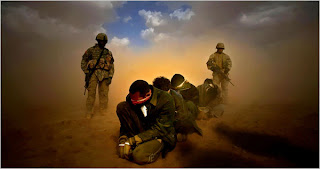
The taxi belonged to a man named Dilawar, a 22 year-old Afghan citizen whose only crime was to be in the wrong place at the wrong time. On May 5th 2002, Dilawar and his three passengers were stopped at a roadblock by guerrilla forces and arrested on suspicion of terrorist activity. The four men were taken to the Bagram military prison for interrogation, and on December 20th, Dilawar was dead. In Alex Gibney's superb documentary, the injuries Dilawar received from repeated kicks to the body and legs are exposed in sickening detail, with the damage inflicted on his "pulpified" legs being comparable to somebody who has been run over by a truck. Dilawar was actually the second prisoner to die while in American custody, with a man named Habibullah passing on just one week previously after suffering from similar abuse. "There was definitely a sense of concern because he was the second one", a soldier interviewed here admits, "You wonder, was it something we did?"
From these deaths, Taxi to the Dark Side draws a line throughout Bagram, Guantanamo Bay and Abu Ghraib, following a thorny path that leads to the top levels of the American government. Included in the film is a television appearance from Dick Cheney, in which he says the following: "We have to work sort of the dark side, if you will, spend time in the shadows in the intelligence world. A lot of what needs to be done here will have to be done quietly, without any discussion, using sources and methods available to our intelligence agencies, if we’re going to be successful. That’s the world these folks operate in. It’ll be vital for us to use any means at our disposal, basically, to achieve our objective". What Cheney is talking about here is torture as a means of procuring information: the use of water-boarding and beatings; denying suspects the right to sleep, drink or even sit for long periods; indulging in sexual humiliation of the captives; and basically breaking down these men until they are willing to talk – to say anything – in order to end their pain.
Gibney's film is angry and impassioned, as you'd expect, but it's also a remarkably clear-sighted piece of work that analyses the issues at hand in an intelligent and compelling way. Gibney has secured interviews with a number of soldiers who were directly involved in the interrogation of these men, and their frank, emotionally charged recollections paint a vivid picture of the situation they found themselves in. Damien Corsetti, a huge, imposing figure selected for the job on the basis of his intimidating presence, says his orders basically consisted of "Soldiers are dying. Get the information", and the interrogators were given increasingly vague parameters as to what they could and could not do in the pursuit of a confession. Basically, Corsetti and his colleagues were never told not to do anything, but they were constantly reminded that the pressure was on to get results. Inevitably, people started to take their hazy mandate too far; as Sgt. Ken Davis suggests, "People were being told to rough up Iraqis that wouldn’t cooperate. We were also told that they’re nothing but dogs. Then, all of a sudden, you start looking at these people as less than human, and you start doing things to them you would never dream of. And that’s where it got scary".
Whenever stories of prisoner abuse broke – particularly when the notorious photographic evidence leaked – such behaviour was always put down to "a few bad apples", but Taxi to the Dark Side makes short work of that argument, clearly showing how the fault lies at the top, with the Bush administration's rejection of the Geneva Convention. Bush told the world that "the United States doesn't torture", but he could only make that argument because his people has constantly attempted to redefine the term itself, questioning what, exactly, constitutes torture? The tragedy of Gibney's film is that nobody in a position of authority was made to pay for their crimes; the hammer came down instead on the young scapegoats who were simply trying to follow their unclear orders as best they could, and who lost their heads in an insane environment. Carolyn Wood, the officer overseeing the interrogations that cost Dilawar and Habibullah their lives, was rewarded with a Bronze Star and a transfer – to Abu Ghraib.
This is fascinating, shocking material, but in perhaps Taxi to the Dark Side's most intriguing sequences, Gibney gradually moves away from specific incidents of abuse to explore the concept of torture itself. Through interviews with experienced interrogators and psychologists, it is debunked as a fatally flawed practice, in which the victim will only be prompted to tell the torturer what he wants to hear. The "ticking-bomb" scenario – the 24-style notion that torture can be justified in a race against time – is laughed off here as a pathetically flimsy defence, and torture expert Alfred McCoy offers a fascinating perspective on the psychological argument against such tactics. One example that highlights exactly why these techniques don't work is the 2003 incident in which a prisoner admitted to his interrogators that there were indeed ties between al-Qaeda and Saddam Hussein, leading to Colin Powell repeating this confession in a speech to the United Nations. Later, it was revealed that this information was nonsense, something the prisoner came up with just because he thought it was what the Americans wanted to hear. Powell described it as the most embarrassing day of his life.
Alex Gibney is a fresh and exciting new voice in American cinema. His last feature, 2005's Enron: The Smartest Guys in the Room was a superbly constructed documentary, in which the director approached his subject with journalist rigour and a filmmaker's eye for storytelling clarity. Those same attributes are on display in Taxi to the Dark Side, and Gibney's ability to create such an alarming and gripping piece of filmmaking from his use of photos, interviews, archive footage and subtle recreations is hugely impressive. This is surely one of the best films of the year, and, for Gibney, it's clear that it's a deeply personal one too. The director's father was a naval interrogator during the Second World War, and he has the last word here, saying "It's destroyed my faith in the American government. Behind the façade of wartime hatred, there was a central rule of law, and we believed in it. It was what made America different". He surely speaks for all viewers – American or otherwise – who are dismayed that such atrocities could be committed in the name of freedom. Taxi to the Dark Side is a plea for human decency.


.jpg)
