Sunday, August 07, 2022

Il Cinema Ritrovato 2022

Pier Paolo Pasolini was born on via Borgonuovo, Bologna, on March 5th, 1922. One hundred years on, his centenary is being marked by an exhibition that explores multiple facets of his work and looks at the artistic influences on his filmmaking, but the celebration doesn’t end there. As soon as I arrived in Bologna, I saw Pasolini’s face staring back at me from posters all around the city, and every bookshop I passed had an extensive display of Pasolini-related writing in prime position in its window. One night after my arrival, a new restoration of Pasolini’s La ricotta (1963) was presented on the huge screen in Piazza Maggiore, and this screening was preceded by a live concert dedicated to Pasolini’s longtime friend and collaborator Laura Betti. This performance was presented for free, for anyone in the city who wanted to experience it.

Aside from how incongruous it feels to a visitor from Britain for a city to widely celebrate an artist like Pasolini in this way (as a friend observed, could you imagine Liverpool doing the same for Terence Davies?), witnessing it all days before Il Cinema Ritrovato began made me instantly feel that I had arrived in a place with a deep love and respect for cinema. As you walk through the streets of Bologna, posters featuring iconic film stars are pasted up everywhere: Sophia Loren, Buster Keaton, James Dean, Anna Magnani. The implacable gaze of Peter Lorre met me every evening as I returned to my hotel, which was particularly unnerving when I had just attended a 35mm screening of Fritz Lang’s M (1931) in Piazza Maggiore.
I only dipped into the Peter Lorre strand during the festival itself. I enjoyed his increasingly unhinged turn in The Beast with Five Fingers (1946), which offers some extremely witty and inventive sequences in the second half that make up for how long it takes to get going. I also loved Lorre's delicious comic double-act with Erich von Stroheim in I Was an Adventuress (1940), although quite why the filmmakers decided the dull romantic pairing of ballet dancer Zorina and the bland Richard Greene deserved the lion’s share of screen time is beyond me. The rest of the strand contained several films I had seen before, however, and I decided instead to venture into uncharted territory, which is where I was introduced to the work of Hugo Fregonese.
 
I had seen one Fregonese-directed film before the festival – his tight, small-scale western Apache Drums (1951) – but as much as I enjoyed that film, it didn’t prepare me for how fascinating I would find his body of work over the course of the following week. Looking at his career – which took him from his native Argentina to the US, Spain, Italy, the UK and West Germany – it might be easy to peg Fregonese as a peripatetic gun for hire, but this programme revealed a thoughtful auteur who elevated films that could have easily been nondescript genre fare in lesser hands. In one of his introductions, curator Ehsan Khoshbakht said that he had considered titling this strand “Under the Hangman’s Noose,” which would have highlighted the strong streak of fatalism that pervades these films. In both Hardly a Criminal (1949) and One Way Street (1950) his protagonists proceed with a confident arrogance, certain that they have beaten the system and will ultimately get away clean and rich. James Mason, as a doctor who steals money from the mob in One Way Street, keeps telling himself and others that his “number’s not up,” but in Hugo Fregonese’s films, your number’s always up eventually.
The darkest of Fregonese’s pictures was undoubtedly the riveting Black Tuesday (1954), a low-budget independent production that boasts a monstrous performance from Edward G. Robinson as a callous mob boss who hatches a plot to escape from Death Row and won’t let anyone stand in his way. The film was striking for the offhand brutality with which it despatched its characters, and the deep shadows that Stanley Cortez coated the increasingly claustrophobic drama in. It’s a blunt, acerbic noir that takes on a on increasing moral complexity as the characters weighs up the value of human life.
 
The gravity of what it means to take a life is often at the forefront in Fregonese’s pictures – consider the impact a stray Nazi bullet has in the superb Seven Thunders (1957) – and the director’s films place their characters in a moral grey area, allowing our perception and loyalties to shift over the course of the movie. In The Raid (1954), Van Heflin leads a troupe of Confederate soldiers in an assault on a defenceless Vermont town, which they plan to loot and then burn to the ground. It's easy to view this as an outrageous war crime, but Sydney Boehm’s excellent screenplay depicts it as an act of retaliation for the destruction of Sherman’s March, and it encourages us to understand the conviction of these men, which is then shaken by the relationships that develop as they stake out their target. This is a truly extraordinary film about heroism, cowardice, redemption and the self-defeating futility of warfare, and it is filled with nuanced character details that gradually draw us into the riveting and poignant drama. The Raid appears to be mostly unknown today but I think it should be regarded as one of the great American Civil War films.
This taster of Hugo Fregonese’s films left me yearning for more, but many of his pictures are frustratingly unavailable, and I doubt I’ll ever see them looking as good as they did on these stellar 35mm prints (The Raid print was particularly ravishing). The Il Cinema Ritrovato programmers always dig up plenty of rarely screened prints from archives around the world, and in some cases they are prints that haven’t seen the light of day in decades. After premiering at Venice in 1962, Franco Rossi’s Smog (1962) completely disappeared from view thanks to the financial troubles faced by its distributor Titanus Films, which would be bankrupt within a few years. Smog is set entirely in Los Angeles, but this is an Italian movie through-and-through, with Enrico Maria Salerno playing a lawyer exploring LA during a 48-hour stopover. He doesn’t speak the language and he finds his way to a community of Italian immigrants, who offer him a different perspective on the city.

Rossi’s film was shot entirely on location and the way he uses the city’s architecture is brilliantly imaginative and evocative, with some of Ted McCord’s cinematography recalling Antonioni’s La Notte (1961), which was released the previous year. Smog is an alternately amusing and melancholy reflection on identity and assimilation, and it’s a fascinating time-capsule portrait of LA in the early ‘60s, with the protagonist traversing different social strata – from a bowling alley and housewives learning Italian to a dinner with one of the city’s richest families – with the Chet Baker score adding to its unique flavour. This screening also offered one of the most unusual projectionist screw-ups I’ve ever experienced, with one reel ending and a completely different movie beginning to play on screen. Thankfully, it didn't hurt my enjoyment of this fascinating oddity.

I saw the reel that abruptly interrupted Smog in its proper context the following day, when I caught Arby Ovanessian’s Cheshmeh (1972) on 35mm. This screening was another real rarity, in fact the print we saw is the only one that exists, having been thankfully archived by Henri Langlois at the Cinémathèque Française shortly after the film first screened in France. Ovanessian mentioned this fact in his introduction, and he also talked about the importance of establishing a specifically Iranian tempo in his first feature at a time when most Iranian cinema was following the rhythm of the commercial cinema from America, France or Russia. He and his inexperienced crew followed this intention to create an enigmatic, poetic, dreamlike picture that slowly and steadily cast me under its spell. With its deliberate movement and gestures, repetitive rhythms and cryptic conversations, the film it most reminded me of was Last Year at Marienbad (1961), while the luminous cinematography by Ne’mat Haghighi put me in mind of Subrata Mitra's work. The film is full of beautiful frames and bold cuts. It's mysterious and often elusive, but I found the experience of watching it to be completely hypnotic and following the resurrection of Chess of the Wind at this festival in 2020, it's another reminder of how ripe for rediscovery this era in Iranian cinema is.
Could this era in Finnish television be similarly littered with gems? I doubt much made for the small screen in Finland in the ‘70s could match Mikko Niskanen’s Eight Deadly Shots (1972), which doesn’t really feel like television at all. Although it is presented in four episodes, the credits just feel like they’ve been inserted at arbitrary points near the 80-minute mark, and it’s easy to imagine this story unfolding seamlessly without interruption. Eights Deadly Shots was subsequently edited into a 145-minute movie by Niskanen’s contemporary Jörn Donner, but in Bologna we were treated to a single presentation of the full 316-minute version, and I think you need this time for the story’s slow accumulation of incident to have the desired impact. Although it was based on a real-life incident, Mikko Niskanen makes it clear in his opening statement that he has poured much first-hand experience into this story with the line "Booze was the root of all evil in our family," and in taking the lead role of Pasi, the alcoholic farmer Niskanen who shot four policemen in a drunken rage, Niskanen is so authentic he appears to be living the experience rather than acting it.

That sense of authenticity is integral to Eight Deadly Shots. Niskanen immerses us into the everyday reality of this family and community, allowing scenes to run for as long as they need to, which gives his narrative the messy, wayward rhythm of real life. In the early stages the film struck me as shapeless and a little confounding, but it gradually sharpens as we get a sense of the various social and psychological pressures that shaped this man’s actions, as well as the corrosive impact his drinking and moonshining had on his health, livelihood and family. As a director, Niskanen has an incredible eye for quotidian details and firm grasp of tone. As an actor, he is simply astonishing – particularly in the wrenching closing scenes – and he is matched by Tarja-Tuulikki Tarsala as Pasi's long-suffering wife, who is increasingly furious and fearful as her husband's drinking worsens. Eight Deadly Shots reminded me of Chantal Akerman's Jeanne Dielman (1975) in the way the repetition of mundane details gets more riveting with every passing second, and as we get to know these characters more intimately, the awful foregone conclusion grows even more unbearable. The late Peter von Bagh, a former artistic director of Il Cinema Ritrovato, spent many years promoting Niskanen’s work and pushing for a 35mm restoration of his magnum opus. As well as being the rep cinema event of the year, this screening was a glorious fulfilment of his legacy.

Sunday, July 31, 2022

Under the Banner of Heaven

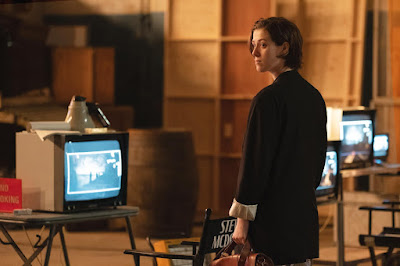
Under the Banner of Heaven has been a long-gestating project for screenwriter Dustin Lance Black, who spent years developing it as a feature before expanding it into a seven-part miniseries. It’s easy to imagine that abandoned film version zeroing in on the investigation into the brutal 1984 killing of Brenda Wright Lafferty and her 15-month-old daughter, but Jon Krakauer’s 2003 nonfiction account of the crime dug deeper to explore the often-violent history of Mormonism, and Black’s attempt to include that historical context in his adaptation has left his series feeling distended and unbalanced.

Tuesday, March 08, 2022

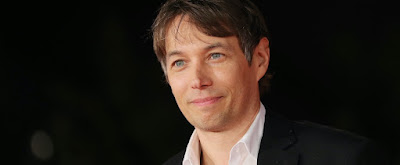
"I'm not scared of polarising films because those are the films that I love" - An Interview with Sean Baker

Sean Baker’s films show us people and places that we don’t normally see on screen, and in Red Rocket he introduces us to the concept of a ‘suitcase pimp.’ In the adult film world, this is the term used for a shady male figure who latches onto a younger female talent to live off her success, and it is represented in Baker’s film by Mikey Saber (Simon Rex), a washed-up porn star who thinks he can suitcase pimp his way back into the industry with the help of 17-year-old Strawberry (Suzanna Son). From shooting the adventures of two trans sex workers on an iPhone to setting a kid-centred tale of poverty in a working motel near Disneyworld, Baker is a director who never settles for the safe choice, and Red Rocket may be his most daring high-wire act yet. This is a dark story about a manipulative and destructive man coercing an underage girl into the sex trade, but it is played as a hilarious and thrillingly unpredictable comedy. As with his previous films, Baker has pulled off this tonal balancing act with extraordinary skill, and I had the pleasure of talking to him about it recently.

I saw Red Rocket for a second time the other night, and the thing I really appreciated the second time around is how immersed you feel in the sense of place. With your films it always feels like it’s shot from the perspective of a native of that area rather than an outsider, and I wonder how you go about achieving that degree of immersion.
 
It was about me and the producer Alex Coco doing what we normally do, where we try to entrench ourselves as much as possible. Because of its sped-up process, we really had less time in development than normal, but that meant we just had to work faster and meet more people to get to a place where we felt comfortably entrenched. What that requires is just literally getting in a car and driving around and approaching people. You’re doing multiple things at once: you're location scouting, you're street casting and you're also discovering a place. That's what I do with each one of these films. It's usually me driving around for a very long time, and then I get the locals involved as much as possible, so they're not just acting in the film, they're also bringing insight of their hometown into the film. In a way, they're being cultural consultants, and I always find people who are incredibly giving and open, and want a light shone on the area they live in or their community. They are very open to helping us get more authentic in terms of the details of the area, such as the slang, and I try to stay geographically accurate, because I always want my films to resonate first and foremost with the people who live in these areas. Their opinion is way more important to me than the opinions of critics or general audiences, so ultimately I want them to feel that the representation is correct and accurate.

One thing that surprised me when I read about this movie is that the budget for it was just over a million dollars. It surprised me because the film is so visually rich and it feels so expansive. You had your biggest budget to date on The Florida Project, so how did it feel to take a step back and work on a more limited scale?

There's always the question of whether I even should do that, whether it's a good career move, but it honestly felt like it was the end of the world at the beginning of 2020, and it was a desperate move just to make a film. I had been developing this other film that was supposed to be larger than The Florida Project, but that got put on hold and it's still on hold, because it's a film that would be very hard to do safely during a pandemic. I was in a place where I was mourning the temporary death of that film and desperate to just do anything, because it was three years after The Florida Project, so it really came from there. I just thought I have to accept this low budget because I'm not gonna get any money during COVID, nobody was. It was a risk just to make a film at that point, no matter who you were.

But you know, I don't want to ever come across as ungrateful. I am extremely grateful that I'm even making films and that this is becoming my primary source of income, so I don't want to come across as ungrateful in any way. I've had to just accept that I'm kind of living in this in this low-budget world, and I'm fine with that. I always thought I might break out and make larger films, and maybe someday down the line I will, but the type of subject matter that I cover obviously is not exactly mainstream. There’s also the fact that I want to own my own IP – which is extremely important – and I want to get final cut, so I'm asking for a lot and all those things combined kind of limits me. And I don't want to work with stars, you know, that's another major thing. I mean, of course I will, and if stars work out for my films that’s wonderful, but unlike almost everybody else I don't beg to try and get somebody in my film, because I'd rather just find an incredible newcomer, or somebody who perhaps hasn't been seen in a while, or reinvent the way people see a celebrity. Because of all those elements combined, I'm kind of at a high threshold, I believe. Maybe it's self-imposed, maybe it's in my head, I'm not sure, but I can't seem to break above a certain budget level. But you know what, I'm fine with that as long as I'm able to make films. This is what I've always wanted to do, so every time I have a little bit of a pity party thing going on, I kick myself and say, at least I'm making a feature, and now there is a certain group of people who want to see my movies, which is an incredible thing.

Like I said, you certainly don't feel the limitations of the budget when you're watching the film. It's one of the most visually intoxicating films I've seen in the past year, and I think one of the big factors behind that is your choice of shooting on anamorphic 16mm. I want to ask you about your work with your cinematographers, because you've had three different DPs on your past three films, and they all have a distinctive look, but there is a unifying aesthetic between them in the way the shots are composed. I wonder if you could talk about what you look for in a cinematographer, and how you worked with Drew Daniels in this case to achieve that look.

Yeah, and I've worked with other cinematographers on commercial spots. I love doing that because I have such admiration for their craft and I know how hard it is; I mean, I'm not nearly skilled enough, but I've actually shot two of my features, so I know. I'm just in awe of these wonderful cinematographers who are able to capture something the way that nobody else can. I’ve found cinematographers who can do that, and I think that new cinematographers are starting to see what my thing is, so they kind of adapt and bring their aesthetic into mine, and then it's a nice collaboration. So far I've had wonderful collaborations. I'll probably work with all those cinematographers again, it's just that right now I love mixing it up and trying new stuff.
 
Drew Daniels was somebody whose work on Trey Schults’ films I thought was wonderful, and he happened to live part of his life in Texas, so I knew he would have that POV. We just got on the phone and immediately connected, and I sent him a lot of Italian genre films from the early 70s to check out because I was pursuing that that aesthetic and that craft, in a way. It's what I've been studying and what influenced Red Rocket over the last five years, and I think Drew was a little taken aback. He's like, “Oh, we're going for something like this? Okay. I wasn't really expecting that.” And then he goes, “Okay, I'll give you that. But I also wanted like you to look at Spielberg's Sugarland Express, because it was shot in the same area.” And of course, we all love Vilmos Zsigmond, so we watched it and I fell back in love with it. I hadn't seen it for 30 years. We were both also very keen on shooting 16mm anamorphic, so I think we already had that general look, and then being in that environment, you just find it. The location ultimately tells you how this film should look. One thing I did say going into it with both Drew, my producers and my sister – who was the production designer on the film – I said, even though this is almost a quarter of the budget of The Florida Project, we cannot make this look like it's a dollar less than the budget of The Florida Project. Even though we were shooting on 16 instead of 35, it was a goal from the very beginning to match production values.

As you were drawing on Italian genre cinema when developing the film, is that why you thank Ornella Muti in the end credits?

I could have thanked many starlets from that era, because in the films that were being made at that time so many of them played Lolita characters, or they were in were variations on the Lolita theme. I mean, we could have said Gloria Guida or Edwige Fenech from all the Italian sex comedies, but there was something about Ornella that really guided me in terms of Strawberry, she had a lot of influence over that character. So that was sort of a shout out to the Italian starlets in general, but Ornella Muti being the one that I felt really represented the influence on Strawberry.

Let's talk about that dynamic between Mikey and Strawberry. I think one of the interesting things about how this film relates to your other work is that you've had this running thread through your films exploring the lives of sex workers, but they tend to be from a female perspective. In this case we are very much taking the male point of view, and you’re aligning us with a character who is really looking at this teenager in a predatory and exploitative fashion.

Yes, definitely. I haven't heard of any female suitcase pimps, so just by that alone I knew I was tackling a male-centric story, and then I actually had to lean into the male gaze, which is a dangerous thing to do. The only reason I say dangerous is because we're living in this time in which social media can so easily turn on you. What's happening now is that I think art is being looked at in a way where if it disturbs you, or perhaps it's just something you don't find pleasing to look at, suddenly that art is bad, and that's where we're at right now. It's a very scary time. I knew that for the last five years, from the people I've been meeting and just the general vibe out there, the attitude is that we've had male gaze for a hundred years in cinema, we don't need it anymore. Well, alright, but I am tackling a film about that and I am a heterosexual male, so I'm sorry, but I'm going to have to use my POV to a certain degree to make this film honest and to make it authentic. So I did something knowing that it might not be for everybody, but it was something that I felt it was ultimately it was the most honest approach. I think you know about the origin, right? You probably read about how I met a handful of these types of men while working on a film called Starlet, and their persona, their behaviour and their general way of thinking fascinated me on many levels. I really wanted to tackle a character study of one of these men because we might have seen men like this in cinema before, but nothing this specific. I've never seen a story of a suitcase pimp before.

Talking about similar types of characters, the first time I saw the movie at the London Film Festival, I watched it within a few days of seeing the restoration of Mike Leigh's Naked. I thought there was a real kinship there. Was that film a touchstone for you?

Naked is one of my favourite films and Mike Leigh is one of my favourite directors. Naked had a profound impact on me when I saw it at the age of 21 at the Angelika Film Centre in New York City, and it's not like I studied Naked going into Red Rocket, but looking back on it now – and you're one of the few that have mentioned it – it's so true. Even the ending, it's so him, you know, the cyclical life that this guy has. I actually haven't watched it for about six years so I'm really curious about revisiting it now and seeing how much I subconsciously stole.

Another thing that came to mind about Strawberry’s agency in this relationship is that you’ve set Red Rocket in 2016, so it’s a very recent period piece, and one of the things about it being the summer of 2016 is that it's right before the launch of OnlyFans. A girl like Strawberry, who already knows she can make money from selling pictures of herself, would nowadays have a direct route to do that. I wonder if the suitcase pimp character will be rendered obsolete because women can now get into the industry independently?

Yes, that's one of a couple of reasons that we set it at that time. I haven't really brought this up in press before, but yeah, the mechanics of the industry have changed even the past five years, so he definitely could be sort of a dinosaur of an archetype at this point. And we discussed that, I brought it up with the consultants on the film, who are from the adult film world and also a sex worker from outside of the adult film world. When I gave them the initial script, there was so much like, “Oh, this wouldn't happen anymore,” but then I told them it's taking place in 2016 so you got to think about it from that POV. So yes, you're correct there.

I know you edit your own films, and I remember talking to you about The Florida Project and how you have to take time to really detach yourself from what you've shot and get perspective on it. I wonder if this one was a particularly challenging edit, because you've got this really brash comedic energy, but also an undercurrent of darkness, and it’s led by this character who gets worse and worse that the more you know him. Was it a challenge to find that balance in terms of the film’s tone and how repellent Mikey is to an audience?

Yeah, the whole film was about that balance, and we even said that from the very beginning when we were getting into development. Every department and every cast member had to understand this, because we wouldn't ultimately know how that balance will be struck until post-production. There were moments on set where we thought, is this going too far? Or perhaps is this not going far enough? Well, it doesn't matter as long as it's covered, and we're going to figure it out ultimately in the edit. That's where I think the rollercoaster of tones or this balancing of tone is figured out. Ultimately, who knows if I got it right? I don't know. I'm just putting out there. I think I got it right, but everyone will have their own opinion. I edit chronologically so I don't do a rough cut, I don't do an assembly, I go right to a fine cut. When I edit the first scene I'm not moving on to the second until I have polished it, and I even polish the sound mix and sometimes tweak the colour before moving on to the next scene, so as I'm progressing, it's talking to me, it's a document saying how I have to keep on the rails. It's really just about gauging it as I'm editing, and that's it. At the end I have a final cut, which is what I'm presenting to my team. Some of my team see it as I'm editing, but my financier and the festivals, they are seeing something that is essentially done. I'm not changing it at that point, so I have to strike the balance right there. Some people will think I do and some won’t.

I admire that approach, though. As an artist you're doing the best work you can do and then throwing out there to let people respond. I feel like your films allow characters to be messy and abrasive, and allow things to be morally ambiguous and unresolved, and it feels like you’re in a bit of a niche there in terms of contemporary American cinema. There’s not much of that kind of openness or provocation. 

Yeah, I think I am, which is surprising to me. Sometimes I talk to filmmakers and they're going to a test screening, and I'm like – What? Why? What do you do? I don't understand. If you're making a film like a Marvel film, where big box office is the most important thing, these test screenings are there to knock out the extremities. If somebody is extremely turned off by this one moment, or they hate the ending, or they don't want this character to be in there, they're going to remove those things in order to make the film more sellable to the lowest common denominator. That's not what I'm trying to do. I'm trying to make a film that I'm happy with, where I feel like I've communicated what I want to communicate, and too bad if you don't like it. That's why I'm working on a budget. I don't believe in test screenings, I actually just want a handful people on my team seeing the film before I put it out there, and I'm not scared of polarising films because those are the films that I love. I look at my top 10 and I don't think any of them have been nominated for an Academy Award, and they are probably around a 65-ish on Rotten Tomatoes, because they are definitely polarising. But I think those are the really challenging films that have an impact and actually demand opinions. They're not just something that vanishes from your head the minute you walk out of the theatre. Those are the most important films for me, so those are the films I want to make.

And finally, I want to quickly ask you about the song Bye Bye Bye, which is so integral to this film. When you’re putting a song into a film in a way that is really part of the movie, it's not just something on the soundtrack, do you have to get that cleared beforehand? Or is it a case where you just put it in and then pray?

It all depends. With The Florida Project it was written, we knew it was going to be Celebration, but I don't think we waited until we did know because we had more money, so there was not going to be an issue. In this case, though, this was quite a rolling of the dice. It all stemmed from the fact that Susie Son is a wonderful musician and singer, she even taught piano at the time, so I wanted to put a scene in the film that highlighted this wonderful talent of hers. So we wrote the scene and then we were trying to figure out what song she would sing, and I wanted it to contextually fit the film. For the next week, we were all texting each other, we had a text thread with everybody recommending different breakup songs, and then one night I was driving around the refineries and Bye Bye Bye came to me. I thought, oh my gosh, why not just go with one of the most iconic songs? It's gonna be a gamble, but I have faith in my music supervisor and we're going to go for it. Now, we did shoot safety backups, you know, we did have her perform twice, performing that song but also an original of hers, and I knew that the film could be made without this song. But we had our fingers crossed and we negotiated after the fact. The only real preparation you have to do is more of a psychological preparation of being possibly rejected, because if they rejected me, after having that song in my head for so long and even editing the opening credit sequence to it and everything, that would have been a pretty hard one to accept.

Red Rocket is in UK cinemas from March 11th

Thursday, February 17, 2022

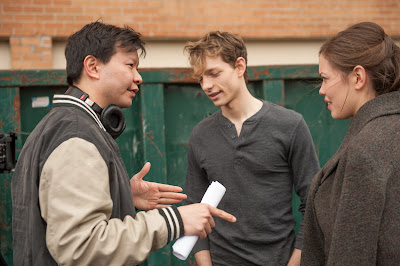
"If you have an independent vision for something, it won't align with many things, at least not easily and neatly, in a way that will make it easily accepted" - An Interview with Patrick Wang

Over the course of four increasingly ambitious features, Patrick Wang has forged one of the most boldly independent careers in American cinema. Having had his self-funded debut feature In the Family rejected by dozens of film festivals, Wang decided to distribute the film himself, and he subsequently continued in that vein with The Grief of Others, his inventive adaptation of Leah Hager Cohen’s novel. Wang’s crowning achievement is A Bread Factory, his epic two-part study of a struggling community arts centre that is threatened by the arrival of a corporate-backed arts space. As with all of Wang’s films, A Bread Factory is a story told with extraordinary intelligence and wit, displaying a great sense of empathy for all of its richly drawn characters, and always taking turns that defy audience expectations. It ranks among the great film achievements of the past decade, but until now Wang’s work has failed to find distribution in the UK. That sad state of affairs changes this week, with the release of the films of Patrick Wang in selected cinemas, and I had the great pleasure of talking to him via Zoom recently.

I first saw A Bread Factory in 2019 in London. I believe it's the only London screening it has had.

I know exactly what screening.

I'm sure you keep track. And it was in an out of the way place as well, it wasn't central London, so it was a bit of a trek to get there, but it was an extraordinary experience. And I've been waiting impatiently for your films to make it to the UK since then, so this is exciting.

That's amazing. So did you know that venue?

No, because the venue is normally a school. I think a friend put it on my radar, and so a couple of us went down to check it out. I'd heard that it had received some great reviews coming out of New York but that's all I really knew about it, so it was a special thing to discover with an audience.

That's fantastic.

This past week I've watched A Bread Factory again and I've watched your previous films as well, and it's great to go back and watch In the Family and see where you started. It's such an assured debut film, it feels like the work of a filmmaker who knew exactly the story he wanted to tell and how he wanted to tell it. I wonder how you prepared yourself for directing a three-hour feature film as your debut. I don't believe you had even directed any short films or anything as preparation, right?

That's right. One of the big differences in talking about debut films is that I was around 35 when I directed that, which is not what we're used to talking about with debut films, you know, it's usually somebody in their early 20s. I had had a background in many different things, but the most directly relevant were probably a long history in theatre and being an actor on a lot of films and TV, so just from being around the camera and being on sets you have a background. Usually if people jump into film they learn on film, but I learned in building sets and talking to costume designers in community theatre and things like that.

And how did you find making the transition from both directing and acting in theatre to doing the same in film, because they are very different disciplines.

Yeah, it is very different. In some ways is that the thing that makes it possible, which is having some feedback mechanism – you can go back and look and assess your performance in some detail – is also one of the challenges, because you can get hung up on too many of those details. I remember when I was first learning how to direct myself on film, I found that the easiest thing for me when I was rehearsing with myself was to do audio recordings, so you have some information coming back from you, you can hear that if it's truthful or not, but you're not micromanaging every detail and concerned about every visual thing you see. I found that that was just the right amount of information, and apparently that's there's a long history of that. I think Orson Welles conducted his rehearsals in a similar way for film.

It's funny that you mentioned Orson Welles because when I saw your directing credit next to your cinematographer, I thought of Welles and Toland being credited on screen at the same time. I guess Frank Barrera is someone you must have really leaned on as a first-time filmmaker. How did that relationship come about?

When we were looking for people for the first film, I didn't know many cinematographers at the time so we were looking for recommendations. He was one that someone recommended, and we had an interview and we got along very, very well. I think that one of the things that I particularly liked about him and that was very special about how he approached the work is that, even though he was somebody who had a lot more film experience than I did, it was like Gregg Toland did not hold that over Orson Welles’s head, he was just there to help align with the imagination of what the director was doing. He had a voice, there were certain things that just out of diligence he had to say, “In a normal movie this is what would be done and these are the ideas behind it,” but if the decision was made not to go in that direction, he would be a very willing conspirator in this in this new madness.

As far as the cards in the opening credits go, I think that when you come to something not heavily steeped in the traditions of it, like I didn't know that much about film before coming into film, there are certain things that seem very silly to you. I was really surprised how many conversations were about cards, and how many negotiations were about who gets which card, and I just thought, of all the things to spend our time on this seems enormously silly. Just as my own personal statement as to how little I think it means, or how much I think it can mean, it doesn't matter to me if I have my own card or not, and then it's actually kind of nice to share it with somebody who I had a very meaningful partnership with on the film.

You had plenty of theatre experience but did you always have an interest in cinema? Were you watching a lot of films growing up?

I was a little late to it all. When you say theatre, a lot of people think of you as a kid who grew up in theatre, but I didn’t have my first small experience with theatre until late in high school when I was an exchange student in Argentina. Then I had gone to college before I started really being curious about theatre, going to more theatre and starting to participate, and then film was even later than that, so I guess I was just a little late to it all. I know relatively little about film. I definitely know little in terms of my generation, and the canon that you might be immersed in as you go through film school or film studies. But I had seen many great films, and I feel like if you see one great film, it's like grad school, especially if you're very receptive to the things that it’s teaching you, and the very high bar of what's possible that it's showing you. I think one of the nice things is when you come to things a little late, or when you come to them without professional aspirations, is that you don't get brought up in a certain mould.

Because you hadn't seen as many films as your contemporaries, I guess you're not steeped in those tropes or the more clichéd visual and narrative ideas that people default to.

When the first movie came out there were a lot of conversations about it, and I remember one review where someone was talking about how it seems to use a lot of TV conventions. I just think that it’s about whatever works in the moment, I'm not particularly hung up on if it's an homage to a certain director or if it's something more common to TV. Between the whole range of what I've been exposed to and then these new things that we discover along the way, they’re what the moment requires, and I kind of like that.

I read a book a few years ago about Éric Rohmer, and it said he barely saw any movies in his youth because his family thought they were a low art form and kept him away from them. Maybe that has something to do with the way his films and his observations of human nature and relationships are unlike any other filmmaker. He sees them in a different way and he puts his stories together in a different way because he hadn’t been exposed to the same things as other directors, and I wonder if that’s something that you've benefited from in terms of how you tell your stories.

This happened a lot with early television as well, and at a certain time in film, where you had people coming from one medium, mostly theatre, and then jumping into this new medium. They have a foundation, they have something to stand on, but also this wide-open canvas of, how do we do things now? I feel like that balance is always nice, where you actually have some foundation and some structure, so it's not complete chaos, but you feel a real freedom and nothing's taken for granted.

When you referenced a review saying that In the Family was like TV, that just sounds crazy to me, because when I watched the film I was struck by your patience and your use of long takes, which doesn’t seem like a television convention at all. The film is full of long, often silent takes where we are just watching people. I’m thinking of the scene after the funeral, when you are in the kitchen and the kid is getting you both a drink, and you let that scene play out in its natural length. I want to ask you about allowing audiences to be in the moment and experience these things, because I think that's one of the key things through all of your films. You don't cut away from things that are going on longer than usual and perhaps feeling a bit uncomfortable.

I learned a lesson on the first film, which I was not expecting to be such a long film. When we were going through scenes I was shocked with the times that the script supervisor was reading back to me. I thought, that can't be right, but it was right and your first gut instinct is, "Oh, no, we must change this." But then I thought, let me figure it out first, let me see what's happening. I was watching what the actors were doing and I realised that they were doing a lot. They were doing their own writing into the scenes that always got me deeper into understanding the situation and these people, and this is another carryover from theatre, where the actor kind of determines the performance. I saw that they were producing rhythms that I wasn't expecting, and sometimes those rhythms – if I were thinking about it – would be much more this-this-this-this, you know, a little more linear and faster, but they were very useful both for the information they give you, and because they add a lot of tension. Once you start getting into the obvious rhythms, you kind of tune out a little because you know where it's going to go. What they were giving me was something very unpredictable, and I liked that, so I ended up staying with them a lot more. But like I said, it was very familiar from theatre where we expect the audience to sit there and we understand the power of what an actor can do with that, so when it was relevant I just maintained that.

There’s a great scene in In the Family where you flash back to show how you and your husband got together. He plays the Chip Taylor song and if there's this awkward fumbling interaction between the two characters, and their emotions are all over the place. You just let the scene play, and I think if you had tried to trim that down or cut away it would not have had the same kind of power.

You know, the scene you were talking about earlier, after the funeral when they come home, that was designed as a static shot, but the scene with Cody and Joey listening to the song has a real performance by Frank as the camera operator. We think about very complicated long takes with a lot of camera choreography that's very technically elaborate or logistically challenging, but this is as well, even though it's handheld. There's a real performance there that completes it in a way that's very different from the other scenes, which are a little more like theatre. This is much, much more cinematic in how it's completed by the camera, and that's been a fun thing to learn.

Your films also manage to achieve a deep emotional impact while never becoming sentimental. It’s easy to imagine these same stories being told in a way that is very manipulative and mawkish.

In some ways it's very simple. When I'm writing, I don't write because I know what's going to happen, I don't write because I want to tell myself something, I don't even necessarily write because I want to tell someone else something. I write because I want to learn something and experience something new myself, to be surprised by something, so if it's an obvious sentimental scene that doesn't hold anything for me, then it doesn't end up holding anything for the audience. I end up being really captivated by the scenes where I learn something, where I'm surprised and moved by something, and it's really that simple. I'm the barometer. If it does something for me, I don't think too hard about it, I want to share it because I think I've learned to think about this person in a very different way here. If other people have the same experience, that's great.

You talked about In the Family coming out much longer than you expected it to be. Was that the big stumbling block about getting into festivals? Did you get any feedback to tell you why it was being rejected from so many festivals?

You almost never get feedback, so it is a guessing game. There were other films of this length playing in festivals, and so even though it makes it harder for the scheduling – my sympathies and appreciation are definitely with the festivals that did play me, because it's hard work – I think if people really wanted to play it, they would play it, regardless of the running time. I think that there were enough things that were odd about it or hard to fit into the way festivals fit identities of films, that if they were on the fence and worried about some other thing, the running time gives them a reason.

It is an incredible story about you being rejected by all these festivals, and then forging ahead and making it happen by yourself. Can you talk a little bit about how you didn't get demoralised and throw in the towel during that process, because getting all those rejections for your debut film has got to feel like one kick in the gut after another.

You do get demoralised and you do throw in the towel, but then another day comes along and you pick up the towel! And yeah, it is hard, but it also reminds you that in our industry – and it is an industry –the term ‘independent’ is used all the time, and I think in a way that erases what that word really means. If you have an independent vision for something, it won't align with many things, at least not easily and neatly, in a way that will make it easily accepted, and that's just by definition. If you truly value independent things, then you do for them whatever you can and sometimes what you can do is limited. It doesn’t become this story where suddenly things change, you know, like there was this this moment in the wilderness and then things turned around. It's just always that way. I had that fiction that if you get over this it will become easier, but it was the same thing with each of the films where you spent a year trying to get a festival to play it and it still doesn't happen. But then every so often some window comes through, like now for the UK, where there's a chance for a few more people to see it and to find it in theatres or digitally, and it's great. You take it and you just try to keep those opportunities alive and help them as much as you can. But there is no grand solution, you can't clever your way out of the real challenge that independent art always has.

One of the things that certainly been accelerated by the pandemic is this idea that independent film belongs on digital and only the big movies are in cinemas, and that divide is getting ever greater. The idea is that people just won't go out for these independent films anymore, but you've really pushed for your films to play in cinemas and you go on tour with them.

Coming from theatre, there’s the idea that theatre changes every night, it's dependent on the audience and the place, and there's a different performance in front of you every night, but I was shocked to realise that movie theatres are still theatres and it still changes every night. The audience is different and the reactions are different, and so I grew very hooked on that. At first I thought I would see maybe one or two screenings of the movie, but I just couldn't keep away, especially as there was new information in that room. The crowd tells you so much about itself as you watch it with them, and then especially if you're going into a different town that you don't know, this new crowd and this new town is telling you something new about themselves. So part of it was that I just personally grew addicted to that process and learned to love it, and wanted to help that as much as possible. It's not so much that I insist that they can only be watched this way, it's just that if we can encourage it we will whenever we can. When we were releasing the films in the US, when I was my own distributor, we just thought, okay, we're going to try to get as many theatres to play it as possible, and when you’re your own distributor you can break all sorts of rules. I think it was over two years that we were in theatrical release because there was no window we were rushing towards, we just decided to keep going as long as we could keep booking places. We would open some cities three or four times.

That never happens nowadays. It's unheard of.

Yeah, and I don't know if it could happen nowadays. A number of theatres have closed since I first took In the Family on the road. I hope it had nothing to do with us! The other thing about that process, is when you get to do it in a place like France, I was telling my French distributors about this beautiful process we had in the US and Canada with In the Family, and they were very enthusiastic to set up that same kind of tour. As distributors, there were some theatres they had never seen, or some they hadn't seen in years, and it was very good for them that it didn’t become this just conceptual thing, it's very tangible. They get to know this space and the people that come in. I didn't know it at the time, but that process of visiting these community spaces meant so much to me, and A Bread Factory really came out of this love for community spaces.

This whole process would have been an enormous learning process, where you're learning on the job, both as a filmmaker and as a distributor. So when you go into The Grief of Others, what were the key lessons that you learned from In the Family that really helped set you up to make your second feature?

I think the kinds of things I learned were not the things that made it easier, they were just all the things that made it possible. For example, with the first film, I had 18 days to shoot, which now feels like an absolute luxury. With The Grief of Others, we had so little money that we only had 12 days to shoot, so if you think there was a little fat or some mistakes you made the first time, you try to streamline the production process, but it becomes that much harder because you’ve got to fit it into these 12 shooting days. The other things we learned were, for example, having the same DP and working so well with Frank, there were new things we could do that were a little more complicated. It's not any easier the second time around but there are benefits. You're not just starting to breeze through this thing, but it's like you're using the little pennies you save to spend on your new designs. With things like distribution, there are some mechanical things you learn but it's a whole different thing. By the time you're talking two or three years later, the world of distribution has changed, the theatres have changed booking policies of certain places have changed. You have to reinvent it a little each time mostly from looking at just whatever is possible around you, but it’s a different set of possibilities in every moment.

The thing that really struck me about watching The Grief of Others is how much you started playing with the form. There's a lot more experimentation in the layering of image and sound and playing with the structure. Was that a direct reaction to how you saw the novel, or was it a case of you and Frank trying to expand your toolset as filmmakers?

I think that it mostly came from the novel. In the novel, there is a character that makes these dioramas and I think that is just a very interesting idea. I've always been fascinated looking at them, just the idea that you take these very ordinary things and rearrange them at odd angles to each other, so they express a very extraordinary picture from very modest means. We took that idea, that concept of the diorama, and applied it to the whole film, and I think that leads to a lot more experimentation. Because it was a much shorter film, I thought that we could afford it, you know, it's hard to have an experimental three-hour film, but something that was an hour forty you can live with that much more. The pieces of the experiment sit closer in your head and kind of reverberate in this much tighter package. I felt like it fit the novel. It was quite a departure from the much more direct realism of the novel, but I think that it was exactly the transformation needed to become a movie.

In terms of the structure, maybe this is a good chance to talk about your work with your editor, Elwaldo Baptiste. Can you talk a little bit about how the finished film reflects your screenplay? You use flashbacks and you have multiple narratives that you’re weaving together. Is that something that you have clearly planned out, or do you develop that structure in the editing room?

It’s pretty much exactly as written. In each of the movies, there's been one scene that's cut and that's it, and everything else appears in the same order that it's scripted. So in some ways, the editing is quite straightforward, you're just choosing shots and you're choosing takes, and you're choosing when you're in and out. But in another way, each of those choices becomes much more important, because when you choose the take you're living with that for the whole scene, and when you're choosing the in and out, that's really the big rhythmic control you have across scenes. It's a very different kind of editing game, but I like it because it also makes it move very fast.

You're playing with such contrasting tones as well. In A Bread Factory, there's a scene where Max has a blazing row with his parents about wanting to quit school and work on the newspaper, and I think the very next scene is maybe the tap dancing in the cafe or more of a comical scene, and it's such a breakneck contrast. It’s a very bold thing to put those things side by side and you do that quite often.

I guess I'm very used to that in theatre, you know, because we don't have that many cuts within scenes. Sometimes our changes between scenes do a lot of that re-energising and the different tones can be quite drastic. I think that it's also a carryover from theatre where, until quite close to the end of the process, we're always rehearsing things out of order, and the director has to use a lot of imagination in the rhythms of how the scenes align. I think when I'm writing I have that imagination in my head, and so it seems quite natural to use these shifts in tone.

That's one of the things that I loved about A Bread Factory. The other thing about these two films – and I know you strictly classify them as two films – is that they are quite different as films. The first one is more realistic and naturalistic, and in the second film you've got these elements that play up the theatricality and artifice, and in a way the film seems to be commenting on itself. The second film begins with the re-staging of events in Part One on stage, and you end the first film with the Chip Taylor song, so there are these elements that remind you that you're watching a film. That's something that seemed like a big departure for you.

In some ways it was possibly more expansive to begin with. I think I was even playing a bit with some sci-fi genres or some other ideas at the beginning, and it was too just much. It did get reined in from what it might have been.

We still get May Ray in their space outfits as a sci-fi element.

There was also a supernatural element, there was a point where Greta had certain powers. [Laughs] You have to have really absurd ideas before the coherent ones start asserting themselves. The thing I particularly liked about the story that emerged and the way it’s told, especially as a comedy, is that usually if you think about a comedy it operates in a certain type of form, and different types of comedy don't usually mix. In the same way I talked about, sometimes I'll use something you'd see on TV, sometimes it's something you'd see more in an art film. I like this idea of high and low, anything that the scene is calling for. These changes of tones or surprises or jolts give you a different kind of rhythm as you move across them too. I think that because it is a comedy, one of the basic elements is that it doesn't take itself too seriously, and some of the things you highlighted – like the credits song and the recap of Part One – are done more out of a sense of fun and looking at what we have than I think any other design.

As someone steeped in theatre, I wanted to ask about how you approached the filming of theatre in A Bread Factory. The performance of Hecuba is shot with a lot of close-ups and has a real intensity.

I'm very happy to hear that question because it's something that Frank and I cared a lot about, and we thought a lot about. It was also a mad day of shooting because we shot all that in one day, the whole Hecuba performance. You know, we talked about self-awareness, and one of the things that we thought about early on is that we didn't want it to be one of those things where it’s self-aware or referencing theatre in any way. It's not like you see lights or you see backstage through the performance. We wanted it to be as close to the experience of going to the theatre as possible, which means you fall into it, which means you buy it. The other thing it means is, this is theatre in a black box, and in a black box you just have this mental flexibility, it can become anything. A big way that it can magically become anything is if you leave out references to geography, so that's why you're talking about it tending to be closer. What is very magical about those black box spaces is that it really lets you fall into the performance of an actor, and that is like a close-up. It's not a literal close-up in theatre, but it's an emotional kind of close-up, and so to replicate that it required a filmic close-up. Those were some of the basic ideas behind it, and they guided us in certain ways that I really loved. There were things that came to me even as I was doing colour correct. I had this idea that because it is so separate in some ways, I liked giving it this very odd opening, where the scene kind of opens up and there are these blocks that reveal. That's a colour block thing that we did and it has an element like a curtain opening. One of my favourite theatre directors, Robert Wilson, did this play I remember where it's just this strip in the middle of the set at the back, and he lights that for twenty minutes in these ever-changing ways. It's so captivating, and I just had the idea of starting from this strip and opening up. So it has an odd ragtag of origins but I'm very happy with where it ended up.

As I said at the start of the interview, I saw A Bread Factory back in 2019, before the world changed. Watching it again now, I felt it resonated in a different way because the kind of community theatre and arts space that it is about are facing even more perilous times. How do you view that aspect of the film now?

In some ways you would be more expert on that because I haven't seen it since the pandemic, but I can imagine the things you're saying, and I can imagine that now it would play very differently, especially in these spaces that are facing more than ever this perilous existence. One of the things they're very good for is that they give people what they need, whatever that is, it's a wide range of different needs and backgrounds of people coming in that they can address, and I think as people need community this is a great way to go back into community. I think one of the things that is my favourite about these movies is that, you know, we can talk in broad themes about big institutions and the role of art and all these things, but it really happens in very modest ways. I'm thinking about the end of Part One, where it looks like everything is on the line for this institution, but then where the film ends up is just one kid with a broken heart, and it's about what art can do to help him through that moment. It's not for any professional means, it's not this great wisdom that he carries with him forever, but it's just to help him through that moment. It's quite modest, but it's also everything.

The Films of Patrick Wang will be released in selected UK cinemas from February 18th, and will be released on digital platforms in March.

https://bulldog-film.com/patrick-wang/

Friday, December 31, 2021

The Best Films of 2021

Of the 126 new films I saw in cinemas in 2021, these are the ones that have really stayed with me. Happy new year, everyone.

25 – Boiling Point (Philip Barantini)
A riveting drama that unfolds in a single breathless take, Boiling Point immerses the viewer in the tension and anxiety of a busy restaurant in the build-up to Christmas. The film is a nimble feat of filmmaking, generating a chaotic, fast-moving situation but maintaining absolute clarity when it comes to narrative and character. Stephen Graham is fantastic as the chef stretched to breaking point on a night when everything seems to be going wrong at once, but this is a real ensemble piece, with the camera frequently branching off to follow someone else around the restaurant, and with every character having their own private crises to deal with. Aside from Graham, the performances by Vinette Robinson, Ray Panthaki, Jason Flemyng and Alice Feetham deserve praise, but really this is a tremendous collaborative effort, and a sensational film.

24 – La abuela (Paco Plaza)
The latest horror from Paco Plaza is a very involving film about a model who returns to Madrid to care for her ailing grandmother, and who subsequently finds herself being subjected to all manner of creepy and inexplicable happenings. It's a superbly crafted picture, with measured pacing and elegant, purposeful camerawork. Daniel Fernández Abelló's sensational 35mm cinematography goes a long way to generating the unnerving atmosphere, utilising shadows in a particularly effective way. The two lead actresses put everything into it: the beautiful Almudena Amor gives an emotionally charged performance as the young woman who fears she may be losing her mind, while a wordless Vera Valdez comes across as both vulnerable and terrifying as the grandmother of the title.

23 – Pig (Michael Sarnoski)
For the longest time Pig seems to be setting Nicolas Cage's protagonist up as a semi-mythical John Wick-ish powder keg of violence, ready to explode at whoever stole his cherished truffle-hunter, but that's not the story that Michael Sarnoski is telling here. As it veers away from the anticipated revenge narrative, Pig grows into something stranger and richer; a film about isolated men dealing with loss that displays great compassion for its characters and deepens our understanding of them in unexpected ways. Sarnoski directs his first feature with confidence, knowing when to let scenes play out at length and when to effectively utilise a sharp cut, and he crafts a couple of unexpectedly quiet encounters towards the end of the film that I was deeply moved by.

22 – Compartment No. 6 (Juho Kuosmanen)
I love a good train movie, and this endearing tale of loneliness and unlikely companionship is a very good train movie. Seidi Haarla and Yuri Borisov give impeccable performances as the two strangers from very different worlds who are randomly thrown together on a long train journey across Russia. Amid the frozen landscapes, their initially contentious relationship gradually thaws, but everything happens in a subtle and organic way, and it never feels like Kuosmanen is forcing the issue. He allows these characters to gradually reveal aspects of themselves but retain a sense of ambiguity and mystery, and It’s a real pleasure to spend two hours in their company. It's an understated, charming film that resolves itself in a beautiful way. Jani-Petteri Passi’s 35mm cinematography is exceptional too.

21 – This Is Not a Burial, It’s a Resurrection (Lemohang Jeremiah Mosese)
An extraordinary film about an elderly woman and her community fighting to hold onto their culture, history and homeland in the face of imminent flooding for a new dam. “What they call progress, it is when men point their damning finger at nature and proclaim conquest over it.” I found some of Mosese's storytelling to be a little opaque, but I found every minute of his direction to be mesmerising. I loved the way he framed his protagonist against the landscape, and Pierre de Villiers' painterly lighting frequently stuns, while the discordant score reflects the tension and uncertainty of these lives being upended. It's a brilliant piece of filmmaking, and it's a monumental swansong for Mary Twala Mhlongo, who passed away last year. She gives a riveting lead performance, with all of her anger, grief and weariness being written on the lined face that Mosese often frames in arresting close-ups.

20 – Memoria (Apichatpong Weerasethakul)
The last thing I expected from an Apichatpong Weerasethakul film is a jump scare, but the first loud noise in the opening scene really caught me off guard! Like Tilda Swinton’s character, I gradually grew less startled and more curious about the source of this sound, and I loved the scene in the mixing studio. How do you describe a sound, especially one that might exist just in your head? As Memoria journeys from the city to the country and into the past, I found the experience of being back in Apichatpong's mysterious world completely entrancing. He gives you the time to get lost in the beautifully composed 35mm images and enveloping sound design; to adjust to his unique rhythms and sensibility. I always feel I breathe differently when watching his cinema. A captivating, disorienting and ultimately moving cinema experience.

19 – Il Buco (Michelangelo Frammartino)
Ten years on from Le Quattro Volte, Michelangelo Frammartino returns to Calabria for another quiet, patient and entrancing study of rustic Italian life. While the shepherds in the region again play a big role, his focus here is on a team of speleologists who explored one of the deepest caves in Europe in 1961. After a brief prologue - with an excerpt from an Italian news programme showing off the brand new Pirelli Tower - the film unfolds wordlessly, with just the shouts of the speleologists and shepherds or distant, murmured conversations being heard. This is a staggeringly beautiful film. Frammartino ensures every shot is brilliantly framed, from the first shot of the cave entrance to the ghostly closing image, and the footage inside the claustrophobic cave itself (God only knows how they filmed in there) is breathtaking, with just the light of the explorers' helmets illuminating the total blackness.

18 – Benediction (Terence Davies)
Just as he did with his Emily Dickinson biopic A Quiet Passion, Davies has made a portrait of an artist that simultaneously feels like a kind of self-portrait. Benediction explores repression, guilt and regret and it also marks the first time that the director has told a story with an explicitly gay protagonist since his early short Mother and Child. He unique way of handling the shifting sands of time produces moments of real power here, with Davies dissolving the past into the present to show how the horrors of the war cast a shadow over Siegfried Sassoon's whole life, and the way he uses poetry, especially Wilfred Owen's Disabled, is masterful. The film is often extremely funny, full of biting dialogue and sly performances, but it gets more mournful as it progresses - a lament for lost youth and lives unlived - and the ending is shattering.

17 – The Card Counter (Paul Schrader)
Schrader is back telling his favourite story, that of a lonely, ascetic character writing a journal in his austere room. The Card Counter is another film about guilt and atonement, rituals and moral choices. Schrader's direction is spare and understated, with Isaac's poker-faced performance perfectly conveying the weight of past sins on his soul. I loved how desolate the film feels, with its backdrop of interchangeable casinos and empty hotel rooms, which makes Schrader's occasional visual flourishes even more potent; like the romantic walk through the stunningly lit botanical gardens, or the extreme wide-angle vision of the flashbacks, which feel truly hellish. The Card Counter has a lot of parallels with Light Sleeper, including Michael Been's son on the soundtrack, and while you just know Schrader is going to go full Bresson once again at the end, his revisiting of that scene doesn't make it any less effective.

16 – The Power of the Dog (Jane Campion)
Campion's long overdue return to cinema is an exemplary adaptation of the novel by Thomas Savage. It's an absorbing and intelligent film about masculinity, desire and power and Campion develops the tension and conflict between her characters so beautifully. There's a great sense of intimacy and tactiliity in the way she films these men at work, and I love the way she shoots her actors, knowing when to frame them at a distance and when to get tighter. Kirsten Dunst in particular has some amazing wordless close-ups where you can see her collapsing internally while trying to to maintain her façade, and I think this is the first time I've seen a really compelling performance from Cumberbatch. Jonny Greenwood's score adds to the sense of menace and tragedy. It's a brilliantly constructed piece of filmmaking.

15 – A Hero (Asghar Farhadi)
Although I enjoyed Asghar Farhadi's soapy Spanish sojourn Everybody Knows, there's no doubt that he is at his best when working within the specific context of Iranian society. This is a film about a good deed that spins out of control, and it's another Farhadi film with no heroes and villains - he just places his characters at moral crossroads and forces them to make difficult decisions which always have unintended consequences. The film is full of characters telling lies but everything is done with the best intentions, which makes the fallout from these actions even more moving to watch. Farhadi's screenplays are meticulously crafted, growing in complexity with every brilliantly timed revelation, and the acting is impeccable.

14 – Riders of Justice (Anders Thomas Jensen)
One Mads Mikkelsen-starring Zentropa film earned widespread acclaim this year, but there’s no doubt in my mind that Riders of Justice is vastly superior to Another Round. This film begins as a tale of fate and chance before growing into a violent and morally ambiguous revenge plot, but one that had me cackling every few minutes. Even as the film's tone fluctuates so wildly, Jensen's handling of it is impressively nimble and confident, and as hilarious as the film often is, he still finds ample room to seriously engage with his characters' grief and trauma. Mikkelsen's performance is a masterclass in simmering rage, while Nikolaj Lie Kaas, Lars Brygmann and Nicolas Bro give him three distinctive comic creations to bounce off, and their interplay is a pleasure to watch. Riders of Justice is one of the year’s biggest surprises.

13 – The Souvenir Part II (Joanna Hogg)
"Did you avoid the temptation to be obvious?" Richard Ayoade's hilariously bitchy character asks Honor Swinton Byrne's Julie in this remarkable sequel. Joanna Hogg certainly did. She continues the story she told in The Souvenir, but she also expands on it in unexpected ways. Hogg has grown as a director with every feature, and while her understanding of her characters’ subtle behavioural and emotional shifts is as acute as ever, Part II is funnier and more surprising, climaxing with a thrillingly bold coup de cinéma, when Hogg appears to be drawing on artists such as Powell & Pressburger, Minnelli, Welles and Scorsese. The Souvenir Part II is about an artist finding her voice, and trying to find some kind of catharsis, understanding and closure through her art, and taken together these two films constitute a formidable achievement.

12 – What Do We See When We Look at the Sky? (Aleksandre Koberidze)
What do we see when we look at this film? It's a real one-off. It's the story of two would-be lovers cursed to never recognise each other, but in truth there's not much of a story here. Koberidze loves to ramble off course, to see what people (and dogs!) are getting up to in the background. Moments both magical and mundane are played in exactly the same deadpan register, and the film is full of non-sequiturs and unexpected digressions, with the director even wondering what the point of his story is at one point in his narration. It's fair to say that What Do We See When We Look at the Sky? probably has no business being two and a half hours long, but I was mostly enchanted by it and it continues to haunt me. Films as strange, surprising, funny and beautiful as this don't come along very often, and I would watch it again in a heartbeat.

11 – State Funeral (Sergei Loznitsa)
I was torn on which of Loznitsa’s two archival documentaries to include on this list, with his Babi Yar. Context being an equally stunning achievement, but in the end I was swayed by the immediacy with which this film brings the pomp and ceremony of Stalin's funeral to life. You forget you're watching something that took place almost seventy years ago. It's an expertly crafted film. Loznitsa edits this breathtaking footage to present a riveting narrative of events in Moscow while also cutting away to town squares and factories across the entire breadth of the USSR, and the sound design is so evocative and involving. It's a film full of indelible and haunting images; both in its overwhelmingly vast crowd scenes and potent close-ups, where every face tells a story. By its nature, there is something repetitive about the way State Funeral plays out, but it develops a real cumulative power.

10 – Red Rocket (Sean Baker)
Sean Baker's latest study of lives on the margins of American society is a raucous comedy built around a sensational performance from Simon Rex as a washed-up porn star. The motormouthed Mikey Saber is both charismatic and obnoxious as he manipulates all those who come into his orbit for his own ends. Baker finds broad and breathless laughs in his actions, but doesn’t shy away from how disturbing this character is too as he grooms Strawberry (the terrific Suzanna Son) in the hope of riding her talent back to the top. As ever, Baker's knack for casting and eliciting memorable performances from experienced actors and first-timers alike is uncanny, and his widescreen framing is frequently inspired. Red Rocket is also one of the best-looking movies of the year. I adored Drew Daniels' 16mm photography, particularly the dusk scenes with the refinery in the background. The colours really pop.

9 – Benedetta (Paul Verhoeven)
This is everything I could have asked for from a Paul Verhoeven-directed lesbian nun melodrama; a film fit to stand in the lineage of Ken Russell’s The Devils. He plays the story of Sister Benedetta for titillation and often for big laughs, but also as a means of exploring religious hysteria and the hypocrisy and cruelty of the Church. Everything is excessive, from the sex to the violence to the visions (the audience I saw the film with absolutely lost it at the first reveal of Verhoeven’s Jesus), and it adds up to a singularly potent brew, full of madness, irony and ambiguity. I’ve consistently enjoyed Virginie Efira’s performances over the past few years, but she is sensational here, giving a suitably passionate and theatrical lead performance, and Charlotte Rampling is astonishingly good as the Abbess who views Benedetta's antics with a coolly sceptical eye.

8 – The Invisible Life of Eurídice Gusmão (Karim Aïnouz)
This is an incredibly lush, involving and heartbreaking melodrama about two sisters in 1950s Brazil. Kept apart by a father's lie, both Eurídice and Guida suffer great unhappiness, their youthful dreams and spirit being crushed, but each of them simultaneously imagines that the other is living a happier life elsewhere. It's a thoughtful and expansive piece of storytelling that really allows us to feel the passage of time and to know these characters, and the performances from Carol Duarte and Julia Stockler feel so lived-in and raw. I also loved Bárbara Santos as Filomena and – having forgotten that her name was in opening credits – Fernanda Montenegro's appearance in the piercing epilogue completely wrecked me. This is a visually stunning film too, with the great Hélène Louvart making expressive use of framing, texture and colour in almost every scene.

7 – Procession (Robert Greene)
Robert Greene's ongoing interest in re-enactment and role-playing has led to something extraordinary here. Working with a drama therapist, he has enabled six survivors of sexual abuse in the Catholic Church to dramatise their abuse, in some cases returning to the scene of the crime. What comes across most powerfully is how deep the scars of abuse go, and how it continues to impact the lives of these men in so many ways decades later, and I was particularly moved by Mike, who has isolated himself and is so filled with rage at the start of the film. Seeing them work through their pain, shame, confusion and anger feels incredibly painful but also necessary; I was reminded of The Work in the raw, visceral emotions that are unlocked. It's a brilliantly made film, but one that's heartbreaking, enraging and draining to watch.

6 – West Side Story (Steven Spielberg)
I feel like I've been waiting my whole life for Steven Spielberg to direct a musical, and while I wasn't sure about him tackling West Side Story, seeing him put his own stamp on these iconic numbers is beyond thrilling. His blocking and timing is unbelievable, and he makes everything look so fluid and effortless. I especially loved his staging of the gym dance, the balcony scene, "Gee, Officer Krupke" and the "Cool" face-off between Tony & Riff; but he pretty much nails every number, and some of Kaminski's lighting is sensational. When I got choked up over a shot of Tony standing in a puddle, I knew Spielberg had me in the palm of his hand. Ansel Elgort is actually pretty good here (much more appealing than he was in Baby Driver, at least) and Rachel Zegler has some beautiful moments, but Tony and Maria are quite colourless parts, and it's the supporting players who draw the eye. Ariana DeBose, David Alvarez, Iris Menas and especially Mike Faist bring an electrifying energy to the picture, while Rita Moreno - sixty years on - is wonderful once more.

5 – The Works and Days (of Tayoko Shiojiri in the Shiotani Basin) (C.W. Winter, Anders Edström)
Over the course of eight hours, The Works and Days introduces us to the elderly population of a small Japanese farming village, and this is the kind of film that encourages you to reset your internal rhythm to match the pace of life as lived by the film's subjects. I found it mesmerising, thanks to the precise rhythm of the editing, the extraordinary soundscape and the brilliant cinematography, with some shots occuring in near-darkness with just tiny glimpses of light visible. Although the filmmakers have stressed that this film is a constructed drama, not a documentary, I was completely drawn in by the effortless authenticity of what I was witnessing, and some of the scenes dealing with Tayoko's relationship with her ailing husband in the latter half of the film are heartbreaking. The Works and Days is an astonishing feat of patience, empathy and skill, and an unforgettable cinema experience.

4 – Licorice Pizza (Paul Thomas Anderson)
This is a stupendously gorgeous film. Anderson takes a cinematography credit once again, but shares it with Michael Bauman (making his feature debut here), and together they create such a vivid sense of time and place. The camera feels perfectly aligned with the characters as they hurtle from one escapade to the next, and they conjure some stunning images - I particularly loved the way they shot the Tom Waits and Sean Penn vignette, with Waits appearing as this almost demonic figure, literally emerging from a cloud of smoke. Licorice Pizza has a loose episodic narrative and it unfolds in a thrillingly unpredictable way. The central relationship between Gary and Alana finds Anderson at his most earnest and romantic while also stirring up messy, conflicting emotions, and he has struck gold with the casting of Hoffman and Haim, who are both incredibly charismatic and fun to watch. I loved it and – as with most of Anderson's films – I can see myself re-watching this many, many times in the future.

3 – The Tale of King Crab (Alessio Rigo de Righi and Matteo Zoppis)
The Tale of King Crab is sparked off by the tall tales and legends being shared about a 19th century drunkard named Luciano, who came into conflict with a prince and was exiled. From these details, Alessio Rigo de Righi and Matteo Zoppis have constructed a fable that begins in the vein of Pasolini before ending up somewhere closer to The Treasure of the Sierra Madre and Aguirre, The Wrath of God. Simone D'Arcangelo's textured 35mm cinematography is among the best I've seen all year, full of brilliant compositions and breathtaking uses of natural light, and the filmmakers bringing their two-part narrative together in a very moving and satisfying way. At its centre, there's also an utterly magnetic performance by Gabriele Silli, who has a commanding screen presence and shows us so much of Luciano's character - his rage, his obstinance, his yearning and his sadness - through his eyes alone. It's a magnificent performance and the film is an incredible achievement.

2 – Petite Maman (Céline Sciamma)
This a modest film that tells a story about two children and runs for just seventy minutes, but it's one of those small movies that feels like it contains the whole world. My favourite Sciamma film up to now was Tomboy, and just as she showed in that perfect miniature, the director once again displays her peerless ability to capture how children play and how they process the world. Petite Maman is so perceptive about a child seeing that her mother is unhappy and trying to understand why. The story is simple but ingenious, and full of casually profound moments: "You didn't invent my sadness." I felt like my heart was going to burst in the last ten minutes. Sciamma doesn't put a foot wrong and doesn't waste a scene, and the two girls are unbelievably adorable. This film is magic.

1 – Drive My Car (Ryûsuke Hamaguchi)
I’ve greatly admired the Ryûsuke Hamaguchi films I’ve seen (and I admired another this year with the ingenious Wheel of Fortune and Fantasy), but this strikes me as the director’s first real masterpiece. Drive My Car is a piercing examination of grief and the mysteries of the heart. Every character is beautifully drawn – each with their own heartache, regrets and secrets – and Hamaguchi shows incredible intelligence and patience in the ways he peels back the layers of his story. As in Happy Hour, he displays a fascination with watching actors in rehearsal, and I loved the way the development of this production of Uncle Vanya was used to illuminate the characters' thoughts and emotions. The actors are all exceptional, but Tôko Miura's wonderfully minimalist performance is particularly captivating, and both times I've watched the film, I've found Yoo-rim Park's delivery of Sonya's monologue in Uncle Vanya to be overwhelmingly moving. Hamaguchi creates moments of such tenderness, warmth and empathy, and the film had me in tears multiple times. A very special film.