

Friday, October 14, 2022
The Swimmers Review


Thursday, September 15, 2022
Causeway Review

Sunday, August 07, 2022
Il Cinema Ritrovato 2022

Aside from how incongruous it feels to a visitor from Britain for a city to widely celebrate an artist like Pasolini in this way (as a friend observed, could you imagine Liverpool doing the same for Terence Davies?), witnessing it all days before Il Cinema Ritrovato began made me instantly feel that I had arrived in a place with a deep love and respect for cinema. As you walk through the streets of Bologna, posters featuring iconic film stars are pasted up everywhere: Sophia Loren, Buster Keaton, James Dean, Anna Magnani. The implacable gaze of Peter Lorre met me every evening as I returned to my hotel, which was particularly unnerving when I had just attended a 35mm screening of Fritz Lang’s M (1931) in Piazza Maggiore.

I had seen one Fregonese-directed film before the festival – his tight, small-scale western Apache Drums (1951) – but as much as I enjoyed that film, it didn’t prepare me for how fascinating I would find his body of work over the course of the following week. Looking at his career – which took him from his native Argentina to the US, Spain, Italy, the UK and West Germany – it might be easy to peg Fregonese as a peripatetic gun for hire, but this programme revealed a thoughtful auteur who elevated films that could have easily been nondescript genre fare in lesser hands. In one of his introductions, curator Ehsan Khoshbakht said that he had considered titling this strand “Under the Hangman’s Noose,” which would have highlighted the strong streak of fatalism that pervades these films. In both Hardly a Criminal (1949) and One Way Street (1950) his protagonists proceed with a confident arrogance, certain that they have beaten the system and will ultimately get away clean and rich. James Mason, as a doctor who steals money from the mob in One Way Street, keeps telling himself and others that his “number’s not up,” but in Hugo Fregonese’s films, your number’s always up eventually.

The gravity of what it means to take a life is often at the forefront in Fregonese’s pictures – consider the impact a stray Nazi bullet has in the superb Seven Thunders (1957) – and the director’s films place their characters in a moral grey area, allowing our perception and loyalties to shift over the course of the movie. In The Raid (1954), Van Heflin leads a troupe of Confederate soldiers in an assault on a defenceless Vermont town, which they plan to loot and then burn to the ground. It's easy to view this as an outrageous war crime, but Sydney Boehm’s excellent screenplay depicts it as an act of retaliation for the destruction of Sherman’s March, and it encourages us to understand the conviction of these men, which is then shaken by the relationships that develop as they stake out their target. This is a truly extraordinary film about heroism, cowardice, redemption and the self-defeating futility of warfare, and it is filled with nuanced character details that gradually draw us into the riveting and poignant drama. The Raid appears to be mostly unknown today but I think it should be regarded as one of the great American Civil War films.

Rossi’s film was shot entirely on location and the way he uses the city’s architecture is brilliantly imaginative and evocative, with some of Ted McCord’s cinematography recalling Antonioni’s La Notte (1961), which was released the previous year. Smog is an alternately amusing and melancholy reflection on identity and assimilation, and it’s a fascinating time-capsule portrait of LA in the early ‘60s, with the protagonist traversing different social strata – from a bowling alley and housewives learning Italian to a dinner with one of the city’s richest families – with the Chet Baker score adding to its unique flavour. This screening also offered one of the most unusual projectionist screw-ups I’ve ever experienced, with one reel ending and a completely different movie beginning to play on screen. Thankfully, it didn't hurt my enjoyment of this fascinating oddity.
I saw the reel that abruptly interrupted Smog in its proper context the following day, when I caught Arby Ovanessian’s Cheshmeh (1972) on 35mm. This screening was another real rarity, in fact the print we saw is the only one that exists, having been thankfully archived by Henri Langlois at the Cinémathèque Française shortly after the film first screened in France. Ovanessian mentioned this fact in his introduction, and he also talked about the importance of establishing a specifically Iranian tempo in his first feature at a time when most Iranian cinema was following the rhythm of the commercial cinema from America, France or Russia. He and his inexperienced crew followed this intention to create an enigmatic, poetic, dreamlike picture that slowly and steadily cast me under its spell. With its deliberate movement and gestures, repetitive rhythms and cryptic conversations, the film it most reminded me of was Last Year at Marienbad (1961), while the luminous cinematography by Ne’mat Haghighi put me in mind of Subrata Mitra's work. The film is full of beautiful frames and bold cuts. It's mysterious and often elusive, but I found the experience of watching it to be completely hypnotic and following the resurrection of Chess of the Wind at this festival in 2020, it's another reminder of how ripe for rediscovery this era in Iranian cinema is.

That sense of authenticity is integral to Eight Deadly Shots. Niskanen immerses us into the everyday reality of this family and community, allowing scenes to run for as long as they need to, which gives his narrative the messy, wayward rhythm of real life. In the early stages the film struck me as shapeless and a little confounding, but it gradually sharpens as we get a sense of the various social and psychological pressures that shaped this man’s actions, as well as the corrosive impact his drinking and moonshining had on his health, livelihood and family. As a director, Niskanen has an incredible eye for quotidian details and firm grasp of tone. As an actor, he is simply astonishing – particularly in the wrenching closing scenes – and he is matched by Tarja-Tuulikki Tarsala as Pasi's long-suffering wife, who is increasingly furious and fearful as her husband's drinking worsens. Eight Deadly Shots reminded me of Chantal Akerman's Jeanne Dielman (1975) in the way the repetition of mundane details gets more riveting with every passing second, and as we get to know these characters more intimately, the awful foregone conclusion grows even more unbearable. The late Peter von Bagh, a former artistic director of Il Cinema Ritrovato, spent many years promoting Niskanen’s work and pushing for a 35mm restoration of his magnum opus. As well as being the rep cinema event of the year, this screening was a glorious fulfilment of his legacy.
Sunday, July 31, 2022
Under the Banner of Heaven

Under the Banner of Heaven has been a long-gestating project for screenwriter Dustin Lance Black, who spent years developing it as a feature before expanding it into a seven-part miniseries. It’s easy to imagine that abandoned film version zeroing in on the investigation into the brutal 1984 killing of Brenda Wright Lafferty and her 15-month-old daughter, but Jon Krakauer’s 2003 nonfiction account of the crime dug deeper to explore the often-violent history of Mormonism, and Black’s attempt to include that historical context in his adaptation has left his series feeling distended and unbalanced.
Tuesday, March 08, 2022
"I'm not scared of polarising films because those are the films that I love" - An Interview with Sean Baker
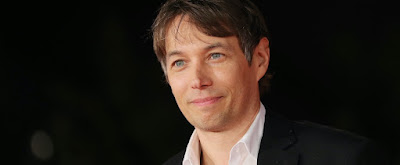
Sean Baker’s films show us people and places that we don’t normally see on screen, and in Red Rocket he introduces us to the concept of a ‘suitcase pimp.’ In the adult film world, this is the term used for a shady male figure who latches onto a younger female talent to live off her success, and it is represented in Baker’s film by Mikey Saber (Simon Rex), a washed-up porn star who thinks he can suitcase pimp his way back into the industry with the help of 17-year-old Strawberry (Suzanna Son). From shooting the adventures of two trans sex workers on an iPhone to setting a kid-centred tale of poverty in a working motel near Disneyworld, Baker is a director who never settles for the safe choice, and Red Rocket may be his most daring high-wire act yet. This is a dark story about a manipulative and destructive man coercing an underage girl into the sex trade, but it is played as a hilarious and thrillingly unpredictable comedy. As with his previous films, Baker has pulled off this tonal balancing act with extraordinary skill, and I had the pleasure of talking to him about it recently.
It was about me and the producer Alex Coco doing what we normally do, where we try to entrench ourselves as much as possible. Because of its sped-up process, we really had less time in development than normal, but that meant we just had to work faster and meet more people to get to a place where we felt comfortably entrenched. What that requires is just literally getting in a car and driving around and approaching people. You’re doing multiple things at once: you're location scouting, you're street casting and you're also discovering a place. That's what I do with each one of these films. It's usually me driving around for a very long time, and then I get the locals involved as much as possible, so they're not just acting in the film, they're also bringing insight of their hometown into the film. In a way, they're being cultural consultants, and I always find people who are incredibly giving and open, and want a light shone on the area they live in or their community. They are very open to helping us get more authentic in terms of the details of the area, such as the slang, and I try to stay geographically accurate, because I always want my films to resonate first and foremost with the people who live in these areas. Their opinion is way more important to me than the opinions of critics or general audiences, so ultimately I want them to feel that the representation is correct and accurate.
One thing that surprised me when I read about this movie is that the budget for it was just over a million dollars. It surprised me because the film is so visually rich and it feels so expansive. You had your biggest budget to date on The Florida Project, so how did it feel to take a step back and work on a more limited scale?
There's always the question of whether I even should do that, whether it's a good career move, but it honestly felt like it was the end of the world at the beginning of 2020, and it was a desperate move just to make a film. I had been developing this other film that was supposed to be larger than The Florida Project, but that got put on hold and it's still on hold, because it's a film that would be very hard to do safely during a pandemic. I was in a place where I was mourning the temporary death of that film and desperate to just do anything, because it was three years after The Florida Project, so it really came from there. I just thought I have to accept this low budget because I'm not gonna get any money during COVID, nobody was. It was a risk just to make a film at that point, no matter who you were.
But you know, I don't want to ever come across as ungrateful. I am extremely grateful that I'm even making films and that this is becoming my primary source of income, so I don't want to come across as ungrateful in any way. I've had to just accept that I'm kind of living in this in this low-budget world, and I'm fine with that. I always thought I might break out and make larger films, and maybe someday down the line I will, but the type of subject matter that I cover obviously is not exactly mainstream. There’s also the fact that I want to own my own IP – which is extremely important – and I want to get final cut, so I'm asking for a lot and all those things combined kind of limits me. And I don't want to work with stars, you know, that's another major thing. I mean, of course I will, and if stars work out for my films that’s wonderful, but unlike almost everybody else I don't beg to try and get somebody in my film, because I'd rather just find an incredible newcomer, or somebody who perhaps hasn't been seen in a while, or reinvent the way people see a celebrity. Because of all those elements combined, I'm kind of at a high threshold, I believe. Maybe it's self-imposed, maybe it's in my head, I'm not sure, but I can't seem to break above a certain budget level. But you know what, I'm fine with that as long as I'm able to make films. This is what I've always wanted to do, so every time I have a little bit of a pity party thing going on, I kick myself and say, at least I'm making a feature, and now there is a certain group of people who want to see my movies, which is an incredible thing.
Like I said, you certainly don't feel the limitations of the budget when you're watching the film. It's one of the most visually intoxicating films I've seen in the past year, and I think one of the big factors behind that is your choice of shooting on anamorphic 16mm. I want to ask you about your work with your cinematographers, because you've had three different DPs on your past three films, and they all have a distinctive look, but there is a unifying aesthetic between them in the way the shots are composed. I wonder if you could talk about what you look for in a cinematographer, and how you worked with Drew Daniels in this case to achieve that look.
Yeah, and I've worked with other cinematographers on commercial spots. I love doing that because I have such admiration for their craft and I know how hard it is; I mean, I'm not nearly skilled enough, but I've actually shot two of my features, so I know. I'm just in awe of these wonderful cinematographers who are able to capture something the way that nobody else can. I’ve found cinematographers who can do that, and I think that new cinematographers are starting to see what my thing is, so they kind of adapt and bring their aesthetic into mine, and then it's a nice collaboration. So far I've had wonderful collaborations. I'll probably work with all those cinematographers again, it's just that right now I love mixing it up and trying new stuff.
Drew Daniels was somebody whose work on Trey Schults’ films I thought was wonderful, and he happened to live part of his life in Texas, so I knew he would have that POV. We just got on the phone and immediately connected, and I sent him a lot of Italian genre films from the early 70s to check out because I was pursuing that that aesthetic and that craft, in a way. It's what I've been studying and what influenced Red Rocket over the last five years, and I think Drew was a little taken aback. He's like, “Oh, we're going for something like this? Okay. I wasn't really expecting that.” And then he goes, “Okay, I'll give you that. But I also wanted like you to look at Spielberg's Sugarland Express, because it was shot in the same area.” And of course, we all love Vilmos Zsigmond, so we watched it and I fell back in love with it. I hadn't seen it for 30 years. We were both also very keen on shooting 16mm anamorphic, so I think we already had that general look, and then being in that environment, you just find it. The location ultimately tells you how this film should look. One thing I did say going into it with both Drew, my producers and my sister – who was the production designer on the film – I said, even though this is almost a quarter of the budget of The Florida Project, we cannot make this look like it's a dollar less than the budget of The Florida Project. Even though we were shooting on 16 instead of 35, it was a goal from the very beginning to match production values.
As you were drawing on Italian genre cinema when developing the film, is that why you thank Ornella Muti in the end credits?
I could have thanked many starlets from that era, because in the films that were being made at that time so many of them played Lolita characters, or they were in were variations on the Lolita theme. I mean, we could have said Gloria Guida or Edwige Fenech from all the Italian sex comedies, but there was something about Ornella that really guided me in terms of Strawberry, she had a lot of influence over that character. So that was sort of a shout out to the Italian starlets in general, but Ornella Muti being the one that I felt really represented the influence on Strawberry.
Let's talk about that dynamic between Mikey and Strawberry. I think one of the interesting things about how this film relates to your other work is that you've had this running thread through your films exploring the lives of sex workers, but they tend to be from a female perspective. In this case we are very much taking the male point of view, and you’re aligning us with a character who is really looking at this teenager in a predatory and exploitative fashion.
Yes, definitely. I haven't heard of any female suitcase pimps, so just by that alone I knew I was tackling a male-centric story, and then I actually had to lean into the male gaze, which is a dangerous thing to do. The only reason I say dangerous is because we're living in this time in which social media can so easily turn on you. What's happening now is that I think art is being looked at in a way where if it disturbs you, or perhaps it's just something you don't find pleasing to look at, suddenly that art is bad, and that's where we're at right now. It's a very scary time. I knew that for the last five years, from the people I've been meeting and just the general vibe out there, the attitude is that we've had male gaze for a hundred years in cinema, we don't need it anymore. Well, alright, but I am tackling a film about that and I am a heterosexual male, so I'm sorry, but I'm going to have to use my POV to a certain degree to make this film honest and to make it authentic. So I did something knowing that it might not be for everybody, but it was something that I felt it was ultimately it was the most honest approach. I think you know about the origin, right? You probably read about how I met a handful of these types of men while working on a film called Starlet, and their persona, their behaviour and their general way of thinking fascinated me on many levels. I really wanted to tackle a character study of one of these men because we might have seen men like this in cinema before, but nothing this specific. I've never seen a story of a suitcase pimp before.
Talking about similar types of characters, the first time I saw the movie at the London Film Festival, I watched it within a few days of seeing the restoration of Mike Leigh's Naked. I thought there was a real kinship there. Was that film a touchstone for you?
Naked is one of my favourite films and Mike Leigh is one of my favourite directors. Naked had a profound impact on me when I saw it at the age of 21 at the Angelika Film Centre in New York City, and it's not like I studied Naked going into Red Rocket, but looking back on it now – and you're one of the few that have mentioned it – it's so true. Even the ending, it's so him, you know, the cyclical life that this guy has. I actually haven't watched it for about six years so I'm really curious about revisiting it now and seeing how much I subconsciously stole.
Another thing that came to mind about Strawberry’s agency in this relationship is that you’ve set Red Rocket in 2016, so it’s a very recent period piece, and one of the things about it being the summer of 2016 is that it's right before the launch of OnlyFans. A girl like Strawberry, who already knows she can make money from selling pictures of herself, would nowadays have a direct route to do that. I wonder if the suitcase pimp character will be rendered obsolete because women can now get into the industry independently?
Yes, that's one of a couple of reasons that we set it at that time. I haven't really brought this up in press before, but yeah, the mechanics of the industry have changed even the past five years, so he definitely could be sort of a dinosaur of an archetype at this point. And we discussed that, I brought it up with the consultants on the film, who are from the adult film world and also a sex worker from outside of the adult film world. When I gave them the initial script, there was so much like, “Oh, this wouldn't happen anymore,” but then I told them it's taking place in 2016 so you got to think about it from that POV. So yes, you're correct there.
I know you edit your own films, and I remember talking to you about The Florida Project and how you have to take time to really detach yourself from what you've shot and get perspective on it. I wonder if this one was a particularly challenging edit, because you've got this really brash comedic energy, but also an undercurrent of darkness, and it’s led by this character who gets worse and worse that the more you know him. Was it a challenge to find that balance in terms of the film’s tone and how repellent Mikey is to an audience?
Yeah, the whole film was about that balance, and we even said that from the very beginning when we were getting into development. Every department and every cast member had to understand this, because we wouldn't ultimately know how that balance will be struck until post-production. There were moments on set where we thought, is this going too far? Or perhaps is this not going far enough? Well, it doesn't matter as long as it's covered, and we're going to figure it out ultimately in the edit. That's where I think the rollercoaster of tones or this balancing of tone is figured out. Ultimately, who knows if I got it right? I don't know. I'm just putting out there. I think I got it right, but everyone will have their own opinion. I edit chronologically so I don't do a rough cut, I don't do an assembly, I go right to a fine cut. When I edit the first scene I'm not moving on to the second until I have polished it, and I even polish the sound mix and sometimes tweak the colour before moving on to the next scene, so as I'm progressing, it's talking to me, it's a document saying how I have to keep on the rails. It's really just about gauging it as I'm editing, and that's it. At the end I have a final cut, which is what I'm presenting to my team. Some of my team see it as I'm editing, but my financier and the festivals, they are seeing something that is essentially done. I'm not changing it at that point, so I have to strike the balance right there. Some people will think I do and some won’t.
I admire that approach, though. As an artist you're doing the best work you can do and then throwing out there to let people respond. I feel like your films allow characters to be messy and abrasive, and allow things to be morally ambiguous and unresolved, and it feels like you’re in a bit of a niche there in terms of contemporary American cinema. There’s not much of that kind of openness or provocation.
Yeah, I think I am, which is surprising to me. Sometimes I talk to filmmakers and they're going to a test screening, and I'm like – What? Why? What do you do? I don't understand. If you're making a film like a Marvel film, where big box office is the most important thing, these test screenings are there to knock out the extremities. If somebody is extremely turned off by this one moment, or they hate the ending, or they don't want this character to be in there, they're going to remove those things in order to make the film more sellable to the lowest common denominator. That's not what I'm trying to do. I'm trying to make a film that I'm happy with, where I feel like I've communicated what I want to communicate, and too bad if you don't like it. That's why I'm working on a budget. I don't believe in test screenings, I actually just want a handful people on my team seeing the film before I put it out there, and I'm not scared of polarising films because those are the films that I love. I look at my top 10 and I don't think any of them have been nominated for an Academy Award, and they are probably around a 65-ish on Rotten Tomatoes, because they are definitely polarising. But I think those are the really challenging films that have an impact and actually demand opinions. They're not just something that vanishes from your head the minute you walk out of the theatre. Those are the most important films for me, so those are the films I want to make.
And finally, I want to quickly ask you about the song Bye Bye Bye, which is so integral to this film. When you’re putting a song into a film in a way that is really part of the movie, it's not just something on the soundtrack, do you have to get that cleared beforehand? Or is it a case where you just put it in and then pray?
It all depends. With The Florida Project it was written, we knew it was going to be Celebration, but I don't think we waited until we did know because we had more money, so there was not going to be an issue. In this case, though, this was quite a rolling of the dice. It all stemmed from the fact that Susie Son is a wonderful musician and singer, she even taught piano at the time, so I wanted to put a scene in the film that highlighted this wonderful talent of hers. So we wrote the scene and then we were trying to figure out what song she would sing, and I wanted it to contextually fit the film. For the next week, we were all texting each other, we had a text thread with everybody recommending different breakup songs, and then one night I was driving around the refineries and Bye Bye Bye came to me. I thought, oh my gosh, why not just go with one of the most iconic songs? It's gonna be a gamble, but I have faith in my music supervisor and we're going to go for it. Now, we did shoot safety backups, you know, we did have her perform twice, performing that song but also an original of hers, and I knew that the film could be made without this song. But we had our fingers crossed and we negotiated after the fact. The only real preparation you have to do is more of a psychological preparation of being possibly rejected, because if they rejected me, after having that song in my head for so long and even editing the opening credit sequence to it and everything, that would have been a pretty hard one to accept.
Red Rocket is in UK cinemas from March 11th
Subscribe to:
Posts (Atom)